

The Sars-Cov-2 pandemic shifted the world into an unexpected situation and made it clear what the pillars of a resilient and efficient healthcare system are. Besides healthcare professionals, medical-hospital equipment are fundamental components of this mechanism, and the sector gained attention during the pandemic. However, what is the situation of this market in Brazil? And what are the prospects for the near future?
Sector data
The sector is composed mostly of medium or small companies. Only 23.4% of companies, according to 2017 data, had annual revenues greater than R$ 6 million. The sector, according to a report by the Brazilian Alliance of the Innovative Health Industry (ABIIS), employed about 142 thousand people in 2019. In another report, produced by ABIMO, production in 2018 reached the level of R$ 10 billion. Between 2014 and 2018, the sector, facing pressure from imports and competition, reduced its workforce by 5,582 people. However, it managed to keep production at the same level during the period, without showing notable variation.
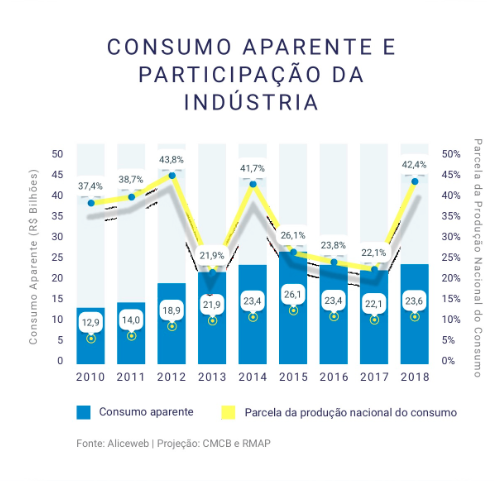
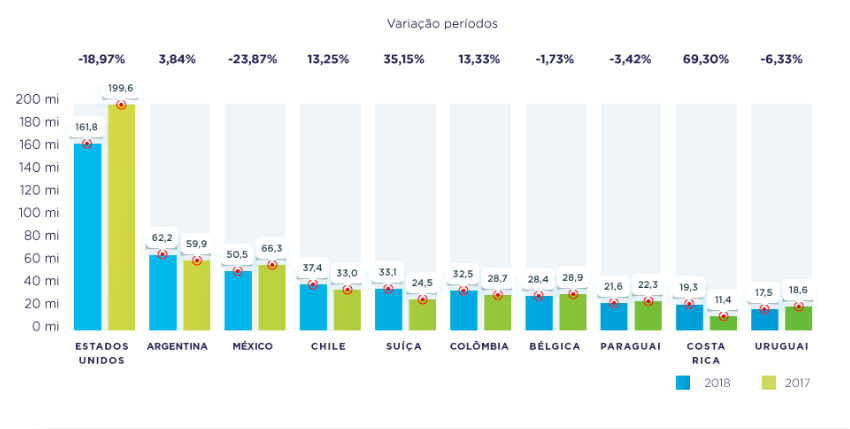
As can be seen in the graph above, most of what is consumed in Brazil is imported. The hospital equipment sector, due to factors such as tax exemption and the solidity of foreign producers, faces strong competitive pressure. Dealing with imported products is the greatest challenge for domestic producers. However, domestic products are also widely exported. According to ABIIS data, in 2019 exports totaled 621 million dollars in equipment. The graph below shows the main clients in previous years:
Pandemic
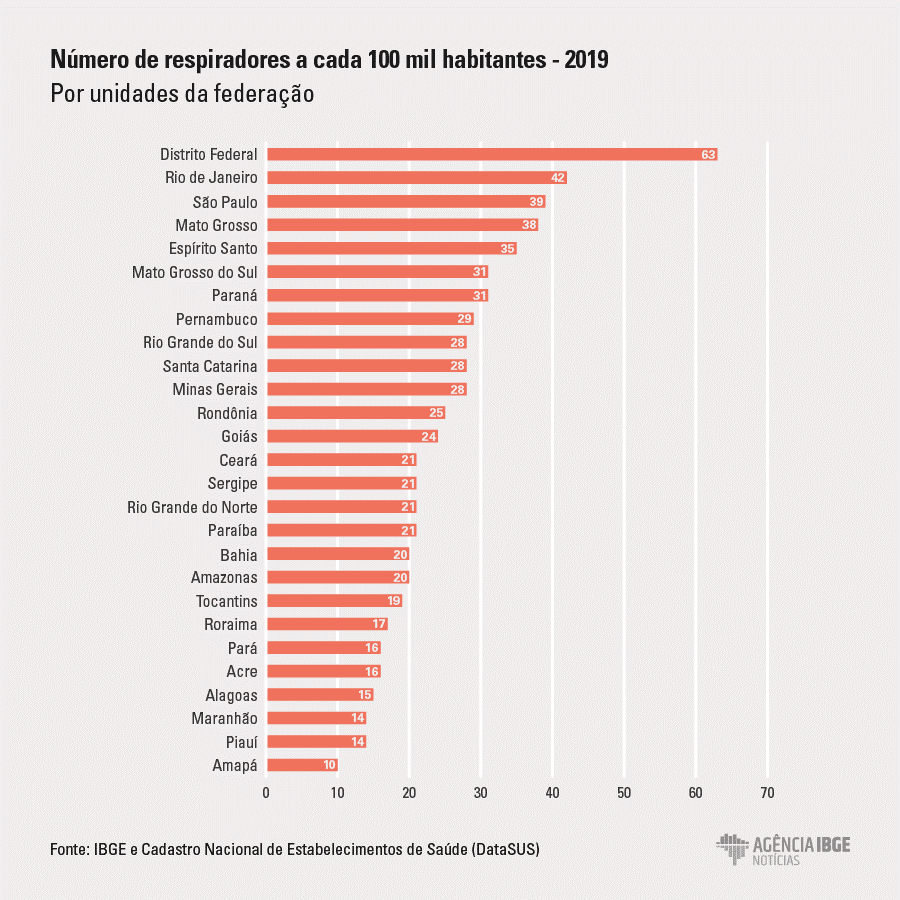
Regarding the coronavirus and its effects, at the end of March 2020, Brazil had 65,411 ventilators (46,663 available in the SUS - Unified Health System - and 18,748 in the private network), according to data from the Ministry of Health. Among the equipment, fundamental in the treatment of Covid-19 patients, however, only 61,219 were fit for use. From the graph below, it can be seen that the North and Northeast regions have fewer ventilators than the other regions.
Good Law (Lei do Bem) and Information Technology Law (Lei da Informática)
The sector relies heavily on tax incentives to remain competitive, considering the advantages of foreign producers. Among the State's incentives are the Good Law (Lei do Bem) and the Information Technology Law (Lei da Informática). Both are undergoing revisions and reformulations.
The Good Law, which grants tax incentives to legal entities that conduct R&D for technological innovation, reached only 6% of eligible companies in 2018 and the Ministry of Science, Technology, Innovations, and Communications (MCTIC), because of this, is developing a proposal to adapt this policy. The proposal aims to improve the perception of the law's impact, with indicators of effort and results, create incentives for companies to hire Masters and Doctors, foster partnerships with ICTs (through the activation and debureaucratization of article 19A of the law) and encourage partnerships between large and small companies. For the electromedical equipment sector, this is good news, as there will be greater incentive to hire qualified labor, currently in short supply.
The Information Technology Law, which grants tax incentives for companies in the technology sector, including medical equipment, underwent a reformulation in April of this year. After the World Trade Organization (WTO) deemed the program's tax benefits illegal, there was a change in the IPI reduction policy and an increase in bureaucracy, as now an authorization from the MCTIC is required before the company can enjoy the financial credits of the Law.
Conclusion
The sector has been growing in recent years but still faces a series of challenges. As previously mentioned, there is a shortage of qualified labor such as technicians, engineers, doctors, and other health professionals specialized in electromedical equipment. Just as an example, there is the situation of doctors in Brazil.
According to research carried out by Medical Demography 2018, of the Federal Council of Medicine (CFM), Brazil registers a rate of doctors lower than that of developed countries. The average of the countries that make up the OECD is 3.3 professionals per thousand inhabitants. In Brazil, this rate is 2.1 and falls to less than 1 in some states in the North and Northeast regions. Exchange rate behavior has also been a double-edged sword, because on the one hand, exported equipment becomes more competitive, and on the other, it hinders access to imported components, not to mention the bureaucracy inherent in imports.
In addition, the sector calls for more regulatory agility. ANVISA's approvals for new equipment are bureaucratic and slow processes. Another challenge, which the Good Law may come to solve, at least partially, is the partnership between excellence research centers and the industry. Overall, sector growth is expected both in the short term, strongly affected by the pandemic, and in the long term, due to the appreciation of the health sector. According to a study by Zion Market Research, the trend for the sector, from a global perspective, is one of growth in the period between 2020 and 2025.