

Industry 4.0 introduces cutting-edge technologies to the world, such as the use of Artificial Intelligence in automation processes, resources like 3D printers and IoT (Internet of Things), among other innovations that promise to make this the revolution with the highest degree of complexity and potential for progress in the field of science.
One of the promising fields for the development of these technologies is healthcare. An area that walks hand in hand with the development of science and academia, incorporating much of what is being developed in Industry 4.0. The most discussed topics today regarding evolution in the medical field revolve around nano and micro-robotics, 3D printing of organic tissues, and the use of artificial intelligence for faster and more precise tumor detection.
Data provided by the Brazilian Alliance of the Innovative Health Industry (ABIIS) help us understand the dimension of the Brazilian economy focused on the medical sector. In March 2020, the country had about 303,000 healthcare establishments in total, across public, private, and philanthropic networks. In 2019, the medical devices sector broadly (MDs) was responsible for about 142,000 jobs. When talking about Medicine 4.0, we must mention the MDs sector, as it is directly linked to the development of technological devices aimed at lowering costs and increasing efficiency in professional segments.
This innovation process in medicine faces three key points to be consolidated: Research and Development, Regulation, and Access.
In research and development, reducing medical costs and bringing longevity to patients are the two factors of greatest interest in society. According to a 2020 study by IPEA, healthcare spending has been growing worldwide due to factors such as changes in the epidemiological profile of the population and the aging of nations. According to a forecast by the Organization for Economic Cooperation and Development (OECD), public health spending in Europe is expected to jump from the current 6% of GDP to near 14% in 2030.
Considering that global income may not keep pace with the increase in medical costs, the application and development of new technologies are crucial for cost reductions in the sector. There are potential resource wastes in modern medicine stemming from misdiagnoses and inefficient treatment methods. With research and development in the area, the trend is that we can be increasingly effective in fighting diseases with more accessible treatments and more assertive diagnoses. The use of AI (Artificial Intelligence), data analysis software, among others, should aid medical and administrative decisions in public and private network hospitals. Research and development is an investment that will return an increase in the population's quality of life in the future.
The regulatory area is extremely important for advancement towards Medicine 4.0. This is because the time it takes to secure patents and register new medical equipment has a direct influence on stimulating innovation.
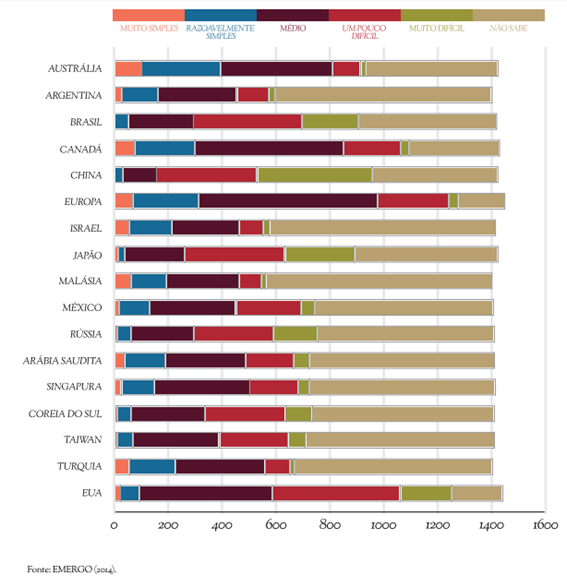
EMERGO, a company specializing in the development and registration of medical technology, conducted two surveys to assess technology regulation across countries. In 2014, with approximately 1,600 professionals in the field around the world, a survey was conducted to measure the difficulty of registering new medical technologies.
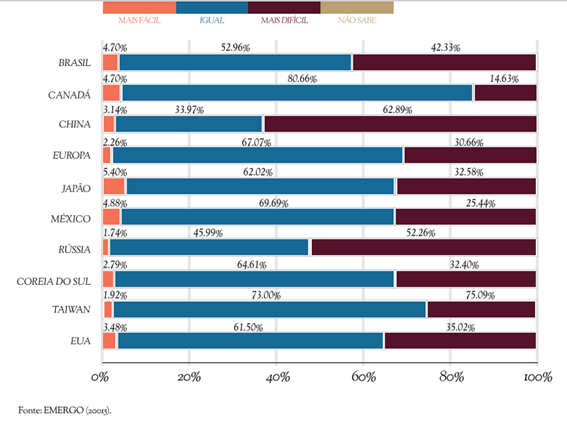
In 2015, this time with 2,200 professionals, the company conducted research to estimate the evolution of the registration time for devices. The results were not very positive for Brazilians. Besides being bureaucratic in this sense, the country has little prospect of improvement, given that about 42% of the interviewees believe it will become harder to get approvals.
Last but not least, we have the issue of access. The ones who stand to gain the most from the development of medicine, undoubtedly, are the population. It's not enough to simply create more efficient methods and devices; they must be accessible to people and applicable in hospitals. If we take the Brazilian context, according to the Credit Protection Service (SPC Brazil) and the National Confederation of Shopkeepers (CNDL), 69.7% of the inhabitants did not have private health insurance in 2018. These people depend directly and exclusively on the Unified Health System (SUS).
The implementation difficulty becomes evident from the results raised in the Census of Basic Health Units (UBS) conducted in 2014. The data, revealed by the Federal Court of Accounts (TCU), indicated that 87.6% of professionals working in the units had standardized medical records with users' health information. Those working with electronic medical records represent 18%, and only 30% of the units have an office with an internet-connected computer.
Introducing Medicine 4.0 in Brazil's public network will be a difficult task with many stages to plan. Saving lives, reducing costs, and gaining efficiency would be the return on a substantial investment in the population's well-being. The question remains: will Brazil be in a position to move towards Industry 4.0 medicine, or will we be left behind again?