Brazil saw an important transformation in the 1990s in its regulatory area.
With the National Privatization Plan (PND), many public services passed to the control of private enterprise – steel, energy, and telecommunications companies, among others.
Thus emerged the first regulatory agencies.
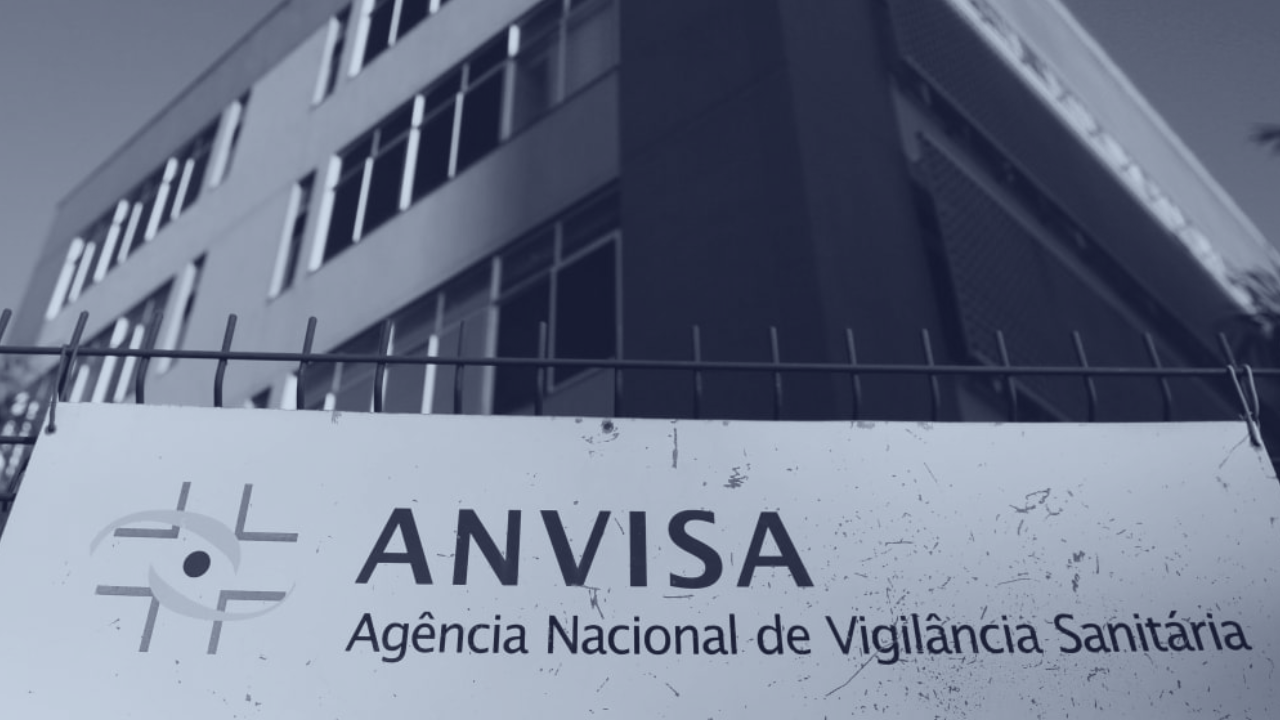
And one of the most relevant is Anvisa – the National Health Surveillance Agency.
Responding to the interest of many of our clients, Sigalei initiates a series of texts on regulatory agencies.
The first of them deals precisely with this regulatory agency that is part of our daily lives – from food to medicines.
Here are five things you need to know about Anvisa:
1. What is Anvisa?
Anvisa is a regulatory agency – a special regime autarchy – created by Law No. 9,782 of January 26, 1999. By definition, it has the role of regulating and monitoring state and private participation in economic activities, aiming at the defense of the public interest, the quality of products and services, and the balance in consumer relations in the sector.
Anvisa has a presence throughout the national territory, and acts in the coordination of airports, ports, borders, and other customs areas. According to the Transparency Portal, Anvisa has more than 2,170 active employees.
2. What is Anvisa's role?
Anvisa emerged with the primary duty of promoting the protection of the population's health.
One of its most known roles is sanitary control. Not only of the production and consumption of products and services submitted to health surveillance. But also of environments, processes, inputs, and technologies related to this production.
In practice, this means that Anvisa has the function of regulating and inspecting practically everything that involves the consumption of food (ours, agricultural, and our pets'). And also, the entirety of our consumption of vaccines and medicines. Just remember the approval process for Covid vaccines, whose approvals were broadcast live in 2021.
Anvisa also has the role of sanitary control of ports, airports, borders, and customs enclosures.
3. What is the structure of Anvisa?
In top management, the main instance of Anvisa is its Collegiate Board (Dicol).
Dicol is responsible not only for defining the Agency's strategic guidelines but also for evaluating, directing, and monitoring the organization.
Among its various competencies, the most relevant is the issuance of normative measures. These rules must be accompanied by technical justifications and, whenever possible, economic and technical impact studies in the regulated sector and impact on public health, waiving this requirement in cases of serious risk to public health.
This is the case of the Covid prevention vaccines that were approved throughout 2021, a year in which the decisions of the Collegiate Board had broad repercussions in the Press.
KNOW ALL THE ATTRIBUTIONS OF ANVISA'S COLLEGIATE BOARD:
https://www.gov.br/anvisa/pt-br/composicao/diretoria-colegiada/competencias
Anvisa's CEO, Antonio Barra Torres, with a term until 12/21/2024, heads a cabinet with seven subordinate units, a list that includes the SCMED (Executive Secretariat of the Medicines Market Regulation Chamber) and the ASNVS (National Health Surveillance System Advisory). Another five governance support units report directly to the CEO, including the GGCIP (General Management of Knowledge, Innovation, and Research).
The other four directorates control a total of 15 units. Among them are relevant managements for the corporate market business – see a summary:
Anvisa Directorate 2 – Led by pharmacist and Anvisa civil servant Meiruze Sousa Freitas, with a term until 12/12/2024. Anvisa's Directorate 2 commands managements such as GGMED (General Management of Medicines), a technical area with the mission of analyzing drug registrations and evaluating the renewal of these registrations, among other tasks. It also handles another highly visible management, GGALI (General Management of Food), which carries out all technical verification of food records – the same ones we find in supermarkets. This management has immense responsibility since it deals with food security, as well as the requirement for consumer information. This Directorate is composed of two other units: GGBIO (General Management of Biological Products, Radiopharmaceuticals, Blood, Tissues, Cells, Organs and Advanced Therapy Products) and COPEC (Coordination of Clinical Research in Medicines and Biological Products).
Anvisa Directorate 3 – Under the leadership of director Alex Machado Campos, a lawyer with a career in the Chamber of Deputies and a stint at the Ministry of Health. With a mandate until 03/31/2025, he heads five units, including some very relevant for the industry – such as GHCOS (Management of Hygiene Products, Perfumes, Cosmetics and Sanitizers), GGTPS (General Management of Health Products Technology) and GGTAB (General Management of Registration and Inspection of Tobacco Derived or Non-Derived Smoke Products). The Directorate also includes GGTOX (General Management of Toxicology) and GGTES (General Management of Technology in Health Services).
Anvisa Directorate 4 – Under the command of Rômison Rodrigues Mota, an economist specializing in Health Surveillance and a term until 12/19/2025. This Directorate leads the work of three units, including GGFIS (General Management of Sanitary Inspection and Enforcement), which is of great importance in the analysis and opinion for the granting of the so-called Good Manufacturing Practices Certificate (CBPF) – a basic requirement that precedes any petition for product registration. Directorate 4 also controls Gelas (Public Health Laboratories Management) and Cajis (Coordination of Analysis and Judgment of Sanitary Infractions).
Anvisa Directorate 5 – Led by director Daniel Meirelles Fernandes Pereira, who has more than 10 years of experience in Public Law, Management and Regulation, and experience in other regulatory agencies, with a mandate until 07/24/2027. He heads the work of GGPAF (General Management of Ports, Airports, Borders and Customs Enclosures), which, at these entry and exit points of the country, handles epidemiological surveillance, monitors and controls the health risk of products and companies, among other attributions. This Directorate includes GGMON (General Management of Monitoring of Products Subject to Health Surveillance) and GFARM (Pharmacovigilance Management)
KNOW ANVISA'S ORGANIZATIONAL CHART:
https://www.gov.br/anvisa/pt-br/acessoainformacao/institucional/arquivos/organograma.pdf
It is worth remembering that the names for the directories of regulatory agencies are nominated by the Presidency of the Republic. These names are submitted to the Federal Senate, which questions them, and if approved, the Planalto Palace later makes the appointment. An important point is that, by law, these nominations have five-year terms, which can possibly be renewed, but which do not follow the same period as presidential and National Congress terms. Directors have tenure and cannot be dismissed 'ad nutum', a factor that effectively guarantees autonomy.
4. What is Anvisa's decision-making process like?
One of Anvisa's responsibilities with the most regulatory impact is certainly evaluating company petitions and granting (or not) the aforementioned Good Manufacturing Practices Certificate (CBPF) of industrial plants and registrations for specific products.
To analyze registration requests, Anvisa counts – as seen previously, with several technical managements that receive petitions and scrutinize technical information such as reports and tests, for example, to then issue a detailed opinion recommending approval or not.
The General Management of Medicines, for example, has the power to analyze and issue detailed and conclusive opinions in processes regarding the registration of medicines, immunobiologicals, and pharmacological products, considering the identity, quality, purpose, activity, effectiveness, safety, risk, preservation, and stability of products under the health surveillance regime.
Once the Opinion is given, it is up to each directorate to evaluate and decide on matters pertinent to its area and, depending on the case, forward the matter to the CEO and/or the Collegiate Board.
Proposals by Anvisa that may affect consumer rights, or society's rights in the sector, may have calls for consultation and public hearing. After the contributions and participation of interested parties, Anvisa makes a report and forwards it for decision-making on administrative rules or even bills initiatives.
5. How to identify the approval of a product by Anvisa?
The approval of a product by Anvisa requires the publication of the registration in the Official Gazette (DOU). This publication is sufficient to prove the authorization given by Anvisa. That is, from then on, the product is authorized to be commercialized throughout the country.
It is very easy to know if a product is approved by the regulatory agency. A simple search on the website <www.anvisa.gov.br> is enough. Access the consultation section and direct the search to one of the categories: medicines, food, cosmetics, health products, and sanitation. The site also makes it possible to check the situation of companies with the Agency.
*
Well understanding Anvisa's attributions and internal processes is fundamental knowledge for Monitoring Analysts and Intelligence Analysts.
This also applies to other federal regulatory agencies (Anatel, Aneel, Ancine, Anac, Antaq, ANTT, ANP, Anvisa, ANS, ANA, and ANM) and to state and municipal agencies.
Here at Sigalei, our Services team has a lot of experience with regulatory issues and has broad capability to map risks and opportunities.
This vision helps to understand who is who in the regulatory agencies, among the names that are political nominations and those professionals with a more technical profile. And also, to identify the movements of the competition.
With this set of services, we help our clients focus on formulating strategies, gaining time to organize the relationship agenda with stakeholders.
We have various tailored solutions, according to the clients' needs. And we will be very happy if we get the chance to make a quick presentation so you can know them.
Send a message and we'll explain how our work is done.
It's a quick and objective chat. Just send an email.
I already await your message.
*Frederico Oliveira is CEO and co-founder of Sigaleifrederico@sigalei.com.br