The country is approaching a new cycle of political mandates.
This transition period demands a lot of attention from the organizations' Institutional and Government Relations (IGR) teams. It is a time of effervescence: urgent bills, appointments, public policy announcements, suspension of measures adopted by predecessors.
To address this issue, Sigalei sought out industry experts.
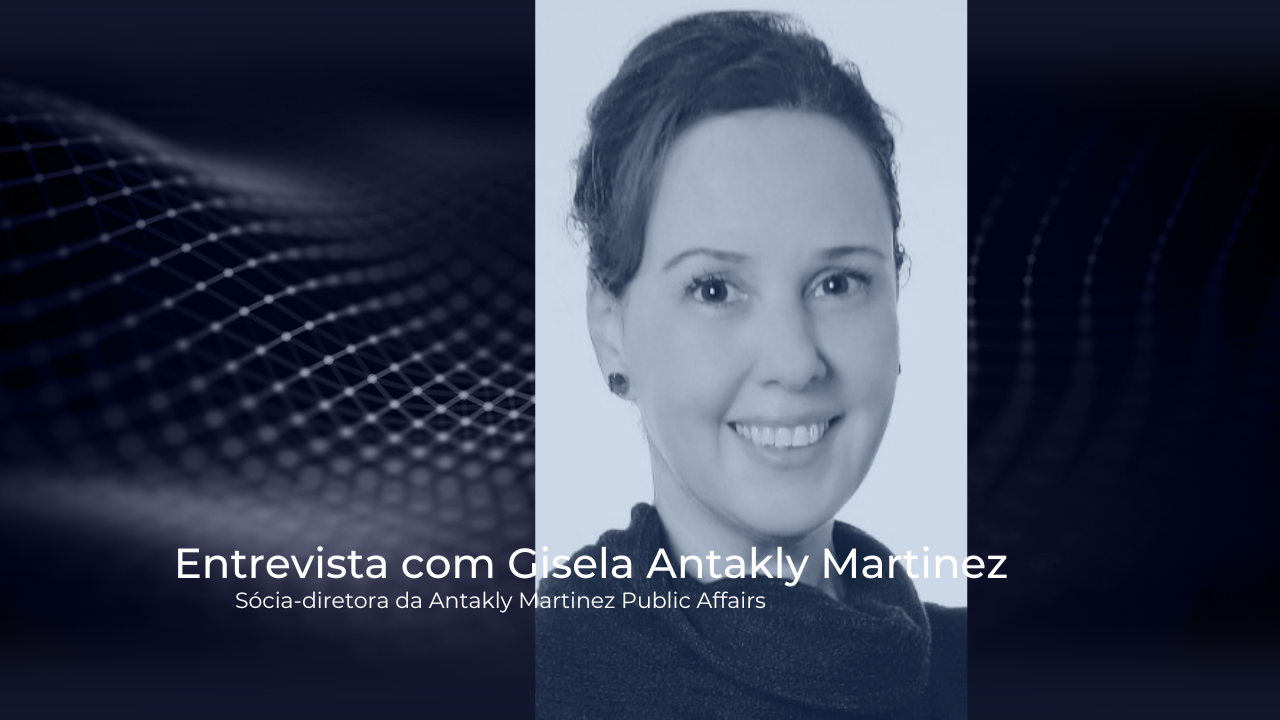
The third interview in our series is with Gisela Antakly Martinez, managing partner of the consultancy that bears her surname - Antakly Martinez Public Affairs.
The firm works to protect the business environment as a whole. Antakly Martinez anticipates scenarios, threats, and opportunities and acts politically and legally to guarantee clients' participation in discussions related to their businesses.
See how our conversation with the consultant went.
1. Sigalei – How does Antakly Martinez Public Affairs operate in the area of Institutional and Government Relations?
Gisela Antakly Martinez – We are an independent consultancy. And one of the advantages is that we can choose the projects we want to work with, the projects we believe in. This allows us to be involved with clients who share this thinking.
Regardless of the political scenario, what matters is the strength of our agenda. This goes far beyond relations with governments. So, we must constantly dialogue with society, the private sector, sectorial associations, and academia. We need to maintain a broad view of relationships.
2. Sigalei – We are going through a transition period, with changes in the Legislative and Executive. Considering this scenario, what should the relationship work with stakeholders be like?
Gisela Antakly Martinez – We believe this construction must be long-term. The alternation of government has less weight when the causes for which companies advocate are, in fact, robust and true to what they propose, because their strategies contemplate other relationship channels with society.
Even if a government's agendas prioritize this or that aspect, when the company builds its strategy solidly, thinking about its long-term performance, thinking about its performance in building its image, it will not change because the government is giving more or less importance to that theme.
3. Sigalei - What is the consultancy's recommendation for this work of bringing organizations closer to new actors?
Gisela Antakly Martinez – From the point of view of approaching and building these agendas, our recommendation is that we always have a very solid agenda, as this is what will open the door for dialogue within the government relations environment. So, regardless of who is in power, it is essential to define and elaborate a solid agenda. Everything else is circumstantial.
In our consultancy, we are increasingly consolidating a vision that strategies should be based on data and evidence. So, we have been thinking a lot about creating Advocacy and GovRel strategies based on data collected, for example, in pilot projects, or even in experiences with other countries. Our goal is that the themes are always very well-founded when we reach the stage of proposing or debating a public policy.
Increasingly, we need to have solid, consistent arguments built on reality to be able to propose the dissemination of the themes we defend. Thus, companies that have solid and consolidated agendas tend to minimize the impacts of government alternations on their strategies.
4. Sigalei - Once the strategy is traced, how to have a greater chance of assertiveness in defending arguments?
Gisela Antakly Martinez – In our understanding, building relationships opens spaces to act methodologically and transparently in relations with the government and in public affairs with the business environment. In this sense, we see the incessant search for common agendas as an important point, that is, which of them can equally favor society, companies, and government. In short: agendas that promote Brazil's development. And there are agendas with this characteristic. Infrastructure is an example. It is a good sector for society, which promotes improvements in human development and is essential for measuring government results. So, there are agendas that benefit different agents and that, therefore, must be worked on with more visibility and hard work.
In this context, a situational assessment is necessary. To define, among so many political actors, who are the ones we relate to, who is being more valued in a new context, and which ones deserve more attention. It is also important to look at the contributions of the players who make up the decision-making process, from the private sector to academia. These are some aspects we always take into account when we think about an advocacy strategy.