
In this new series of articles, Andréa Gozetto* details the debate surrounding the regulation of lobbying in Brazil.
This debate has gained relevance, since on December 10, 2021, the Executive Branch sent to the Legislative Branch a bill that aims to regulate the lobbying activity in Brazil and which received the number 4391/21[1]. Initially attached to PL 1202/07[2], on March 29, 2022, it was detached and distributed to the Committees on Labor, Administration and Public Service (CTASP) and Constitution and Justice and Citizenship (CCJC). As a result, it is subject to conclusive appreciation. On April 13, 2022, it was received by CTASP, and on May 3, 2022, Rep. Augusto Coutinho (REPUBLICANOS-PE) was designated as the rapporteur. Highlighting the strong political articulation underway, on April 27, 2022, Deputy Fayette de Andrada, Vice-leader of the Republicans, presented request n. 630/2022[3] requesting that PL 4391/21 be considered on an urgent basis.
These movements are not trivial, given that it is the first time that the federal Executive Branch has shown support for a legislative proposal aiming to regulate lobbying in Brazil.
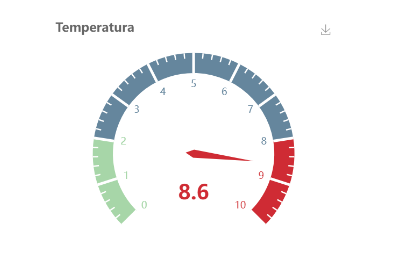
An important piece of data obtained through Sigalei, a technology platform for Institutional and Governmental Relations, is the Bill's Temperature. This indicator informs whether the PL is experiencing a more or less heated debate in the National Congress. The temperature is calculated from the processing of the Bill compared to other propositions of the same type from the same house that were processed in the last 90 days.
Currently, PL 4391/2021, which is on the Federal Government's priority agenda for 2022, is at a temperature of 8.6 (high), following the urgency request presented and the definition of the proposition's rapporteur.
It is important to note that Decree 10.889/21 which implements the Electronic System of Agendas of the Federal Executive Branch (E-Agendas) has its applicability with private agents established by PL 4391/21.
This means that the E-Agendas – which should be fully operational by October 2022 –, will lose effectiveness, if PL 4391/21 is not approved by then. That is the reason for the urgency and the high temperature.
From the point of view of the democratic process, one must be careful, because where there is urgency, there may be a risk of ignoring relevant and legitimate interests.
There is only one consensus on the regulation of lobbying: it is a major challenge! At the core of this challenge is the difficulty in combining the promotion of transparency, the strengthening of the positive contributions of lobbying and mechanisms that provide a reduction in the informational asymmetry between interest groups.
The purpose of this series of articles is to provide subsidies to deepen this debate, which should be open, broad, and unrestricted. To achieve this, I use the argumentative logic that Wagner Pralon Mancuso and I previously presented in chapter 7 of the book Lobby and Public Policies, published in 2018. There, we discuss this challenge from a series of important questions, among them: (i) definition of lobbying and its role of activities; (ii) scope and coverage of the standard regarding its applicability to public and private agents; (iii) publicity of information and responsibilities regarding the implementation and inspection of the standard; (iv) sanctions and penalties, accountability mechanisms and quarantine. Here, I apply this logic to the analysis of PL 4391/21.
Until next time!
__________
References
__________
*Andréa Gozetto is the Executive Director of Gozetto & Associados and creator of the Conexão RIG hub. Since 2015, she has dedicated herself to supporting IGR areas to improve their strategic management and to base their political incidence actions on scientific evidence. She is the creator of the MBA in “Economics and Management– Government Relations” and the short course “Advocacy and Public Policies: Theory and Practice” from FGV/IDE, acting as academic coordinator in São Paulo. She holds a Post-doctorate in Public Administration and Government (FGV/EAESP), a Doctorate in Social Sciences (UNICAMP), a Master's degree in Political Sociology (Unesp-Araraquara) and a Bachelor's degree in Social Sciences (UFSCar). She acts as a career mentor in IGR, guiding and advising professionals to maximize their results.