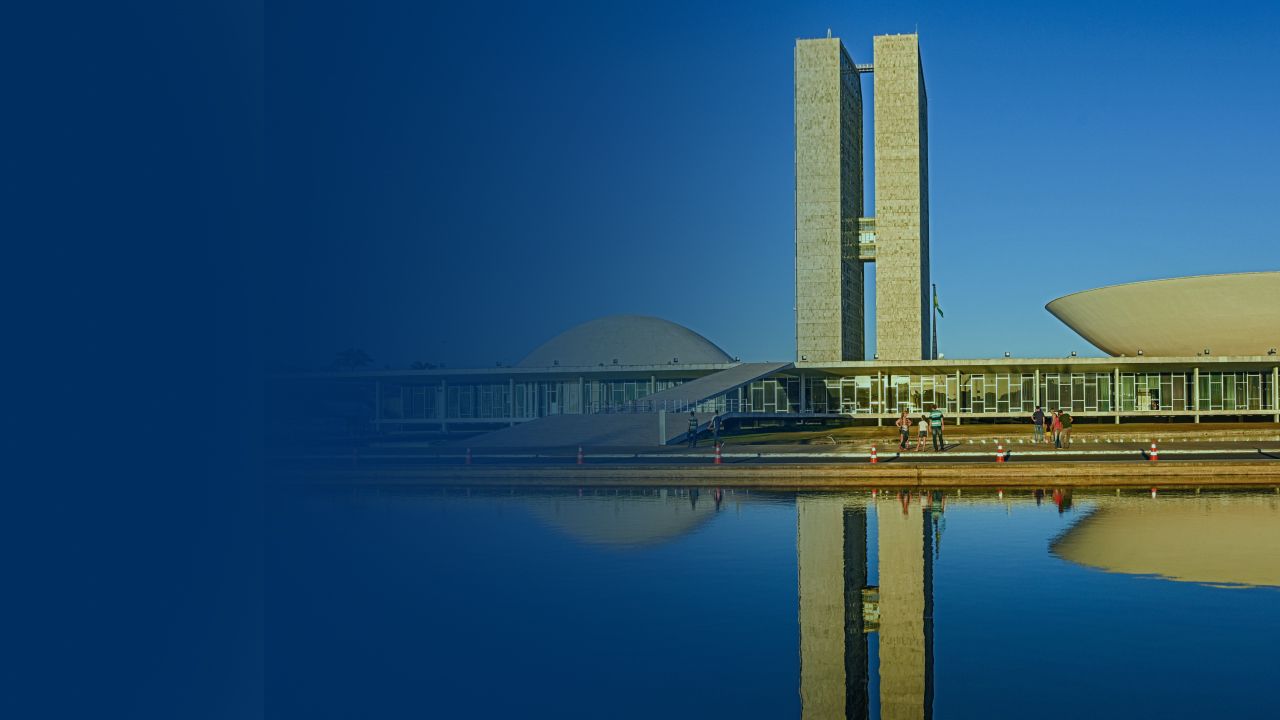
Defending interests through lobbying or advocacy requires extensive knowledge of the Brazilian legislative process. In each stage, there are different opportunities to enter the debate and influence decision-makers, in this case, parliamentarians who discuss and vote on proposals. Check below the summary of the legislative process made by Strategos Consultoria Política Jr for the Sigalei Blog:
What is the legislative process?
The Legislative Process is foreseen in the Federal Constitution and detailed in the internal regulations of the legislative houses. It is the set of provisions that discipline the work of legislative institutions and their political agents. Each house of the National Congress has an internal regulation that governs the processing of legislative propositions until they become legal norms, constitutional provisions, or are archived.
The Internal Regulations of the Chamber of Deputies and the Federal Senate can be easily found on their respective websites. It is also possible to download the PDF file for free on the National Congress website
There is also the Common Regulation, which is applicable to both Deputies and Senators and regulates the functioning of the joint sessions of the National Congress.
Therefore, all legislative propositions are submitted to the legislative process and, therefore, are regulated by the internal regulations of each house. However, the processing is not the same for all projects presented. A Bill (PL), for example, will be forwarded differently from a Proposed Amendment to the Constitution (PEC), just as the processing of a Provisional Measure (MPV) will be completely different from the processing of a Legislative Decree Bill (PDL), these are some examples of the diverse types of propositions that exist and that follow different paths within the legislative process. Besides these propositions, opinions, requests, amendments, control and inspection proposals, indications, etc., are also considered.
Parliamentarians are not the only political agents capable of presenting a Bill (PL). According to article 61 of the Federal Constitution, a PL can be proposed by any Deputy or Senator, by any Committee of the two houses of Congress, by the Head of the Executive (President of the Republic), by the Prosecutor General of the Republic, by the Supreme Federal Court, by the Superior Courts or by popular initiative. It is interesting to point out that the vast majority of all bills start their processing in the Chamber of Deputies, except those presented by Senators or Senate Committees.
Committees in the Legislative Process
Next, it is essential to know about legislative committees, their formation processes, and their functions for a deeper understanding of the legislative process.
Committees are groups responsible for discussing and voting on propositions and there are two main types of Committees: the Standing Committees and the Temporary Committees, the latter specifically being inquiry, external, or special committees.
In total, each legislative house has one Steering Committee, responsible for directing and administering legislative activities, and eleven other Standing Committees, such as the Constitution, Justice and Citizenship Committee (CCJC) and the Finance and Taxation Committee (CFT), whose function is to address specific issues of interest, mainly in the form of debate, in order to confer the interests of the area on projects under consideration, and to analyze propositions before they are taken to a plenary vote. The CCJC and CFT have, unlike other committees, the terminative power, which consists of the power to end the processing of a project if it presents any unconstitutionality or budgetary inadequacy, and all committees are endowed with conclusive power, to dispense with plenary deliberation for bills.
Regarding Temporary Committees, their function differs from the standard standing committees, lacking a specific recurring theme; therefore, they are created in particular situations with diverse purposes, among these, inquiry. Thus, we have the most recent example of the Parliamentary Inquiry Committee (CPI) of Covid-19, created to clarify inconsistencies found in purchasing processes for equipment, allocation of funds, among others, during the Covid-19 pandemic (2020 - current). In addition to the Inquiry Committees, there are also Special Committees, whose role is to analyze and issue an opinion on PECs (proposed amendments to the Constitution) and bills whose theme covers the interest of more than three standing committees, changes to the internal regulations of the Chamber, and complaints against the President of the Republic. Finally, it is also necessary to point out the External Committees, set up to monitor issues located outside the Chamber's headquarters.
Final stages of the legislative process
If the analysis of the Standing Committees is not conclusive, the bill proceeds to the plenary vote, generally requiring a minimum quorum of 257 Deputies or 41 Senators (half the number of parliamentarians plus one, falling into an absolute majority quorum), and the vote can be by means of a symbolic vote, where there is no computation of individual votes, nominal vote, which relies on the use of the electronic system to count votes, or secret ballot, commonly used to elect the President of the Chamber, for example. Thus, projects approved in both legislative houses are forwarded for presidential sanction or veto, the latter being total or partial, and always voted again by the Legislative Houses to finally veto the project, also by absolute majority count.
__________
This article was written in partnership with Strategos Jr., a political consultancy at the University of Brasília.
Learn more about Strategos Jr. clicking here
__________
Sigalei | Technology for Government Relations
Sigalei automates and makes the processes of monitoring propositions and following the legislative process faster and simpler for companies and class associations.
Click and contact us to learn more
__________
References
Chamber of Deputies - Understand the legislative process
Chamber of Deputies - Legislative Process