Internal and external connections to generate value for business
The Institutional and Governmental Relations areas strengthen the internal and external connections to organizations and encourage the construction of strategies that generate value and avoid risks to companies. Furthermore, the upright action of IGR professionals contributes to all society by expanding the transparency and ethics in the democratic process of representing interests with the public power and support the qualification of the debate and construction of public policies.
“The center of the value of the IGR role is in how to absorb information to prepare the company to navigate the complex external environment.” Suelma Rosa
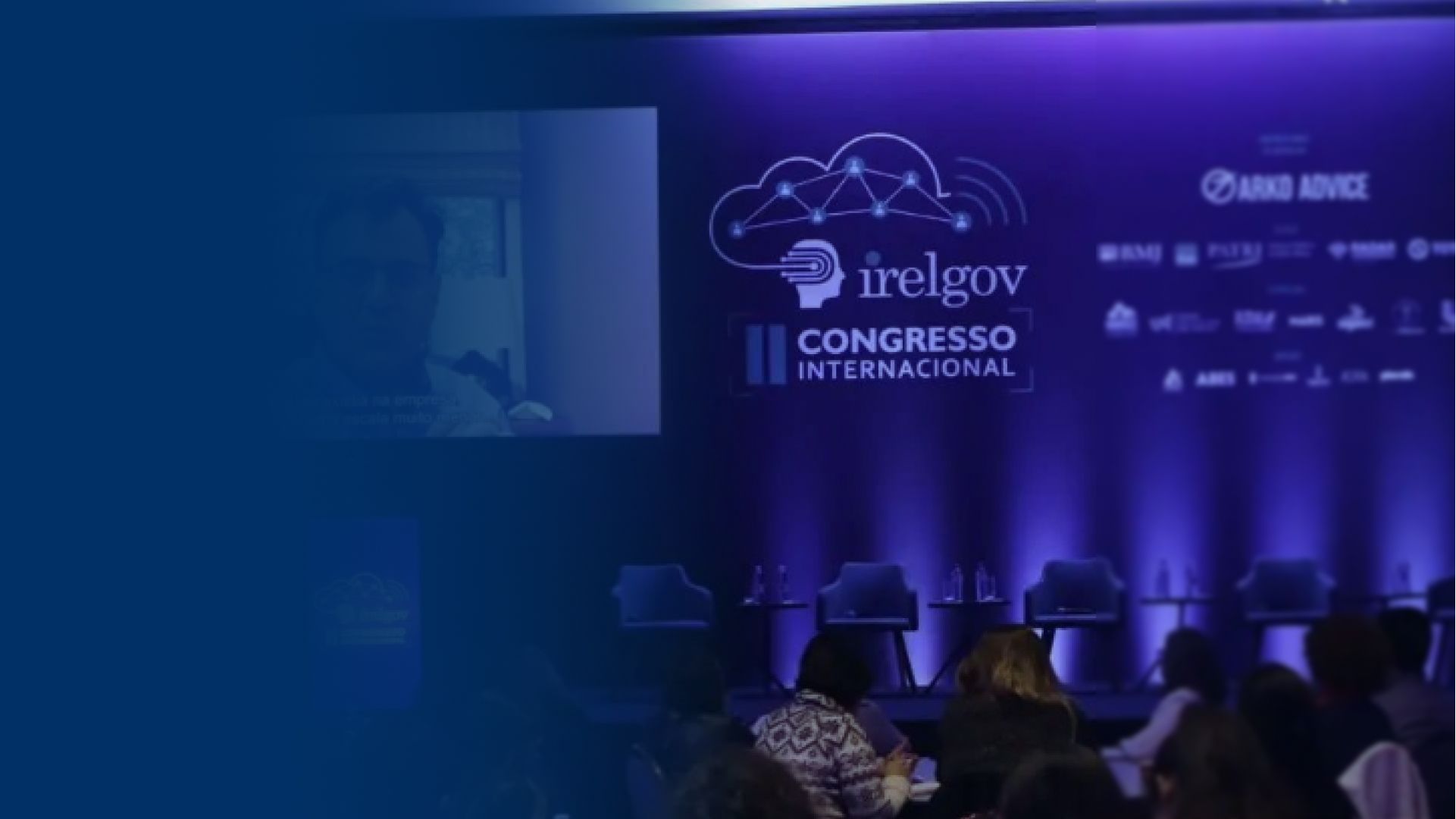
These are some of the highlights that the guests of this interview emphasized about the main topics discussed during the II International Congress of Governmental Relations, promoted by the Institute of Governmental Relations (IRELGOV) on May 19 and 20, 2022.
The meeting provided a series of debates on new forms of institutional relations, with influence on public policies, their importance for democracy and the value generation of the IGR activity for companies.
And to make a balance of the Congress based on what was presented in the two days of debates we invited Suelma Rosa, former President of IrelGov and Senior Director of Corporate Affairs and Sustainability at Unilever, Juliana Marra, Senior Manager of Institutional and Governmental Relations at Unilever and Guilherme Camargo, Coordinator of Institutional and Governmental Relations at Unilever to highlight the main points observed in the speeches during the event and reinforce the messages for those who follow the Sigalei Blog. Good reading and take note of the tips!
Balance of the II International Congress of Governmental Relations
In a balance of everything that was said by the speakers throughout the Congress, Juliana Marra and Guilherme Camargo highlight as main messages to IGR professionals the importance of connection and internal integration of the IGR teams with other areas of the companies and the relevance of the multiplicity of knowledge:
“The institutional and governmental relations professional and the area as a whole need to work in a collaborative way with the other areas. The most important thing is that the areas work together and are integrated into the business. It cannot be just a consulting area within organizations. It is necessary to work within the business area. Just informing what is happening in politics does not add the value to what the company expects from the area, which is to understand what is happening internally to be able to translate the opportunities and risks from the outside in.” Juliana Marra
“For the IGR professional, today, it is not enough to just know the internal regulations of the legislative houses, it is necessary to have a broad knowledge of how the company's business works and what are the implications of the business in the IGR area. A multiplicity of knowledge is required, thus facilitating the interlocution of the IGR professional with the other areas of the company.” Guilherme Camargo
Suelma Rosa's tip for the area and professionals to demonstrate their value internally is to invest in the intelligence of the area “IGR professionals are not just readers and alert generators, as it creates an anguish of being ultra informed all the time for nothing. The value comes from the capacity of the professional to connect what is happening out there and resignify the information to the risks, issues and opportunities of the company.”
Lobbying as a strengthener of democracy
Regarding democratic participation and the role of the IGR professional in strengthening democracy, Guilherme and Juliana highlight the legitimate role of the defense of interests that contribute to qualifying the public debate and subsidizing better decisions and public policies.
Guilherme points out that “one of the roles is to inform legislators about agendas dear to the company and to society, information that they, perhaps, do not have access to or cannot look into. This role, of informing, already justifies the performance of the IGR professional in strengthening democracy: arming the legislator with sufficient arguments so that he can make an informed decision.”
In this context of democratic participation, Juliana Marra reinforces that “Representing interests is legitimate and it is part of this process to bring information to the public sector, whether representing a civil society entity, a company, a group or council of professionals.”
Value of IGR for companies and for society
The main values that IGR activities generate for companies and society are, from the point of view of Guilherme Camargo: transparency and integrity.
“Transparency, within the company, of how IGR does and what it does reflects outward. There is nothing to fear with the representation of interests done correctly and transparently. And integrity goes hand in hand with transparency.” Guilherme Camargo
Juliana Marra adds that “the professional has to be clear about the challenges and have the peace of mind of how we are going to deal with them in a transparent and upright manner, finding paths and allies.”
IGR challenges post Covid-19 pandemic
For Juliana, the challenges that IGR professionals must face after the pandemic are diverse, but the most important thing is to deal with emergencies and having a network of relationships already structured to activate in moments of urgency is the main one.
“Always being in doubt whether we already have the possible paths for the things that may be to come and being prepared to react. Having the networks already connected to activate them the moment the challenges come.” Juliana Marra
Suelma Rosa goes further and reinforces that it is no longer a matter of anticipating the future in the same logic that the future is projected based on past experiences:
“What happens in the pandemic and with the acceleration of processes and everything that is to come in this post transition is something much more complex than the trend, it is no longer a future that is anticipated from the past. What can be done is to recognize that the world has changed and to adapt to this agility. The volume of information is so great that it is not possible for one person or one team to process alone, so we will have to find a way to do this and focus on what is necessary.” Suelma Rosa
Suelma also highlights some important aspects of the new world for IGR:
“The transparency is inside and outside the company. Vertical communication no longer exists, the communication now is horizontal and everyone is a potential source, a potential influencer and can transform overnight into someone who is heard by all. We have to know how to read this context, to be prepared for whatever comes knowing that whatever happens will be reinterpreted by this new national and global social structure.” Suelma Rosa
IGR and ESG
Regarding the role of the IGR professionals and areas together with the practices of ESG, Suelma recalls that there are differences between working in a company that already has these principles incorporated into its purpose and working in a company that is still creating this culture. But, regardless of the stage of maturity of sustainability within the business, the IGR area stands out as the best place to direct the organization's ESG agenda, as it already has the advantage of a very systemic view and multi-stakeholders.
Juliana Marra complements this perception of the importance of IGR acting with socio-sustainable issues by evidencing that the role of GovRel in ESG stands out in the “G” of “governance”:
“Our IGR role is to represent governance and reorganize, if necessary, in the exercise of what we do and in what other colleagues internally should also do. It is the role of IGR, together with legal and with compliance, to bring external elements to exemplify with good practices. Also to be clear on how things cannot continue and what this can cause. This is directly linked to the reputation of the company.” Juliana Marra
Election year: main challenges and opportunities for IGR
On the risks and opportunities that the election year scenario can generate for IGR professionals, Guilherme Camargo sees the greatest risk as the lack of perception and analysis of the scenario in a broader way, and the greatest opportunity is being able to strengthen relationships with stakeholders who may become important political actors. He also emphasizes the importance of having a non-discriminatory view between candidates, because a possible loser of the election could be opposition in the future.
“The biggest risk is the lack of perception, knowledge, and analysis of the scenario that we are currently in and taking any kind of action without a broad view of where we are, who we are talking to and why we are talking to a particular person. The biggest opportunity is having the possibility to present and defend interests with stakeholders who may become a more than key stakeholder a few years from now. Talk to these people who will possibly join a new government, who will possibly be the heads for the formulation of public policies.” Guilherme Camargo
Suelma considers that electoral moments are great opportunities to position macro agendas and dialogue with all sides, however, she remembers risks that are inherent to our electoral system which represent great risk, such as the continuous transition of the political electoral regulation and the Brazilian party system, which generate instability due to the constant changes and the lack of clarity on the rules that remain in force or not. "The rules that apply for the 2020 elections are different from the rules that applied in 2018 and were different from 2016".
Future of IGR and New Technologies
For the future of institutional and governmental relations, the three professionals interviewed believe that technology is beneficial and that it depends on IGR professionals to generate the appropriate interpretations for the businesses in which they operate.
Juliana has no doubts: "the technologies help and can help much more, mainly in cross-referencing data, of contents, of people. And this frees up professional hours for intelligence, analysis, and governance issues. It is necessary, now, to internalize the systems to the point of making the best out of it. I don't see it as possible for the IGR professional to be replaced by a machine".
For Guilherme the amount of data will grow and IGR professionals will need to be able to systematize this in an intelligent way and use the power of conciseness to pass information to third parties in an objective way so that anyone can understand.
Suelma highlights, finally, the importance of advancing in the processing of data and information and identifying what are the relevant variables to identify patterns of decision-making processes outcomes (legislative, multilateral negotiation, public policies). However, this [technology] is the basis, but the role of intelligence is still necessary, analysis, understanding the business, anticipating risks and making these bridges and connections that are activities carried out by the human professional. The relationship still plays a relevant role in the world of IGR and this will not be digitized.