About the Bill
The Firearms Control Statute, PL 3722/2012, will grant individuals who meet the minimum legal requirements the right to own and carry firearms for self-defense or protection of their own property. The author of the proposition is Deputy Rogério Peninha Mendonça from the PMDB-SC party, whose presentation took place on 04/19/2012.
The bill's summary consists of: “Regulates the rules on the acquisition, possession, carrying, and circulation of firearms and ammunition, providing penalties and taking related measures.” In addition, PL 3722/2012 amends Decree-Law No. 2,848 of 1940 and revokes Law No. 10,826 of 2003, which is intrinsically related to public security and addresses the circulation of firearms among ordinary civil society.
The bill reduces the minimum age to purchase firearms from 25 to 21 years and allows more authorities, including deputies and senators, to carry weapons. Furthermore, it eliminates restrictions that prevent individuals under police investigation or criminal proceedings from purchasing or carrying firearms.
The new rules require buyers to be over 21, provide proof of residence and employment, and demonstrate technical and psychological capacity. The bill establishes a limit of six firearms per person. The Disarmament Statute (Law 10,826/03) already provides for these requirements but prohibits the sale of firearms to ordinary citizens under the age of 25. The sale of permitted firearms will be restricted to establishments registered with the Brazilian Army, which will maintain a register. However, the sale of restricted-use firearms remains prohibited.
What is the current status of the bill's processing?
Bill 3722/2012, authored by Deputy Rogério Peninha Mendonça (PMDB/SC), was presented to the Chamber of Deputies on April 19, 2012. This project aims to establish new rules for the acquisition, possession, carrying, and circulation of firearms and ammunition in Brazil, promoting changes to the Penal Code and proposing the repeal of the Disarmament Statute.
The processing of PL 3722/2012 began in the Public Security and Combating Organized Crime Commission (CSPCCO), where the designated rapporteur, Deputy Claudio Cajado, issued a favorable opinion with a substitute on November 27, 2013. Subsequently, the project was forwarded to the Constitution, Justice and Citizenship Commission (CCJC), where the rapporteur, Deputy Alberto Fraga, also presented a favorable opinion with a substitute on October 22, 2015. Later, the project was submitted to the Finance and Taxation Commission (CFT), where it received another favorable opinion with a substitute, issued by rapporteur Deputy Jerônimo Goergen on November 14, 2018.
After starting normal processing, the project faced significant obstacles and remained without substantial progress in the first commission for a period of two years. Given this situation, a special commission was created with the objective of replacing all previous commissions. This special commission was fundamental to unblocking the project's processing, resulting in its approval and subsequent forwarding to the plenary for deliberation.
The rapporteurs of the mentioned commissions presented favorable opinions, each with specific substitutes aimed at adjusting and improving the original text of the project. These substitutes reflected the concerns and suggestions of the commission members, seeking to ensure that the project serves the interests of public security and respects citizens' rights.
In the most recent dispatch, dated March 22, 2023, the Presidency of the Chamber of Deputies decided to redistribute the project to the Economic Development Commission and the Industry, Commerce, and Services Commission, in accordance with Chamber of Deputies Resolution No. 1/2023. This redistribution aimed to ensure a more comprehensive and specialized analysis of the project, considering its economic and industrial impacts.
The project was still awaiting a vote as of May 2024. For the project to go to the Federal Senate and then for presidential sanction, a Plenary vote is required.
What are the motivations/which groups does it represent? Is the author part of a commission or bench?
The motivations for Bill 3722/2012 are multifaceted. Peninha and his supporters argue that the Disarmament Statute, in force since 2003, excessively restricts citizens' right to self-defense and is, according to them, more ideological than technical. They argue that the population should have an easier time acquiring and carrying weapons as a means of personal and family protection, especially in a country with high crime rates. Rogério Peninha Mendonça, affiliated with the Brazilian Democratic Movement (MDB), is an active member of the Agricultural Parliamentary Front - being an agronomist by training - also known as the ruralist bench, which defends agribusiness interests in the National Congress. In addition, he was a prominent member of the so-called "bullet bench", a parliamentary group that brings together politicians who defend the flexibilization of gun laws and oppose disarmament policies. Generally, the project serves the interests of pro-gun groups, including associations of sports shooters, hunters, and collectors (CACs), as well as ordinary citizens advocating for the right to self-defense.
Which parliamentarians and interest groups have spoken on the subject? Which were favorable and/or contrary?
Regarding the sectors of society that participated in PL 3722/12, they were:
Fabrício Rebelo, an expert in Public Security from the Northeast, is in favor of the Bill (PL) and opposes disarmament. The National Association of the Arms and Ammunition Industry (ANIAM), as well as the Brasiliense Sports Shooting Federation, the NGO For Legitimate Defense, and the Viva Brasil Movement, also defend the PL and oppose disarmament. On the other hand, the National Council of Municipal Health Secretariats (CONASS) and the National Council of Health Secretaries (CONASEMS) are opposed to the PL and in favor of disarmament.
Regarding the parliamentarians who participated in PL 3722/12, they were:
Rogério Peninha Mendonça, from the PMDB of Santa Catarina, not only supports the Bill (PL) but is also the author of the proposal. Claudio Cajado, a representative of the PP from Bahia, is also in favor of the PL. Laudívio Carvalho, from PODE in Minas Gerais, not only endorses the PL but also acts as its current rapporteur. Marcelo Aguiar, from DEM in São Paulo, had a significant participation by demanding the separation of PL No. 7,075/2017 from PL 3722/2012, aiming for independent processing, and expressed support for a solution to disarmament in Brazil, although not explicitly supporting PL 3722/2012.
Ivan Valente, from PSOL in São Paulo, voted against Bill 3,722/2012. Capitão Augusto, from the PL in São Paulo, is in favor of the PL. Luiz Couto, from the PT in Paraíba, also positioned himself against Bill 3,722/2012. Subtenente Gonzaga, a representative of the PSD in Minas Gerais, supports the PL, having presented a separate vote with some proposals for alteration. João Rodrigues, from the PSD in Santa Catarina, is also in favor of the PL. Alessandro Molon, from the PSB in Rio de Janeiro, is opposed to the PL. Finally, Guilherme Mussi, from the PP in São Paulo, is in favor of the PL and proposed a separate vote with the intention of improving the initial project.
Which commissions and legislative houses did the project go through? What was the outcome in each?
The processing began in the Foreign Relations and National Defense Commission (CREDN), where Deputy Claudio Cajado (DEM-BA) was designated rapporteur. In June 2013, Cajado presented a favorable opinion with a substitute, suggesting modifications to the project's original text.
Subsequently, the project was forwarded to the Public Security and Combating Organized Crime Commission (CSPCCO), which focused on the project's impacts on public security. In addition, by Peninha's request, the Economic Development, Industry and Commerce (CDEIC) and Finance and Taxation (CFT) Commissions were also included to evaluate the economic and financial aspects of the proposal. Next, the Constitution, Justice and Citizenship Commission (CCJC) analyzed the constitutionality, juridical aspects, and legislative technique of the project.
Due to the complexity of the theme, a Special Commission was established exclusively to deal with PL 3722/2012. In 2014, this Special Commission approved Deputy Laudívio Carvalho's substitute, which incorporated the proposal to create a license for rural gun carrying, by 19 votes to eight against. This license aimed to allow rural property owners and workers over 25 years old, who depended on the use of a firearm for personal and patrimonial defense, to carry weapons within the limits of their rural properties, upon proof of residence and a certificate of good conduct. Although Bill 3722/2012 has advanced considerably through the commissions, the final voting stage in the plenary of the Chamber of Deputies is still necessary for its definitive approval.
Who was the project's rapporteur? What was his position?
Initially, the project's prominent rapporteur was Dep. Claudio Cajado (DEM-BA), and his position was for approval. The project's current rapporteur is Laudivio Carvalho of the PODE party in Minas Gerais, and his position was for approval.
Were there public hearings?
There were public hearings, with 12 requests approved for this purpose. On 11/04/2014, a request was approved, convening various entities to discuss PL 3722/12. Among those convened were Mr. Bené Barbosa, President of the Viva Brasil Movement, Mr. Fabrício Rebelo, Public Security Specialist from the Northeast, Mr. Salésio Nuhs, President of the National Association of the Arms and Ammunition Industry (Aniam), and Mr. Fernando Segóvia, Federal Police Delegate, all in favor of the PL. The justification for the public hearing highlights the importance of Bill No. 3,722 of 2012 for society. The objective was to obtain more information and clarification on public security and the Disarmament Statute, promoting a broad discussion on the theme, which would contribute significantly to the work of the Special Commission.
Regarding the other stakeholders, they are:
1. Citizens: The general population would be directly impacted by the change in the laws regarding weapon possession and carrying, citizens would have more means for self-defense, while opponents fear an increase in domestic violence and incidents involving firearms.
2. Police and Security Forces: The Military Police and Civil Police would have to deal with a potential increase in the circulation of firearms, which would impact public security and policing strategies.
3. Judiciary System: The Judiciary, including the Public Prosecutor's Office and the Public Defender's Office, could see an increase in cases related to the improper use of firearms, as well as in the workload related to criminal proceedings and police inquiries.
4. Arms and Ammunition Industry: Arms and ammunition manufacturers and merchants would likely benefit from increased demand should the project be approved.
5. Human Rights Organizations and NGOs: Organizations such as the Sou da Paz Institute, which take a stance against the flexibilization of gun laws, intensified their efforts to promote disarmament policies and awareness about the dangers associated with increased weapon possession.
The discussion on PL 3722/2012 is multifaceted, and the decision on its approval would deeply affect several aspects of social, economic, and security life in Brazil.
Scenario of advancement or not?
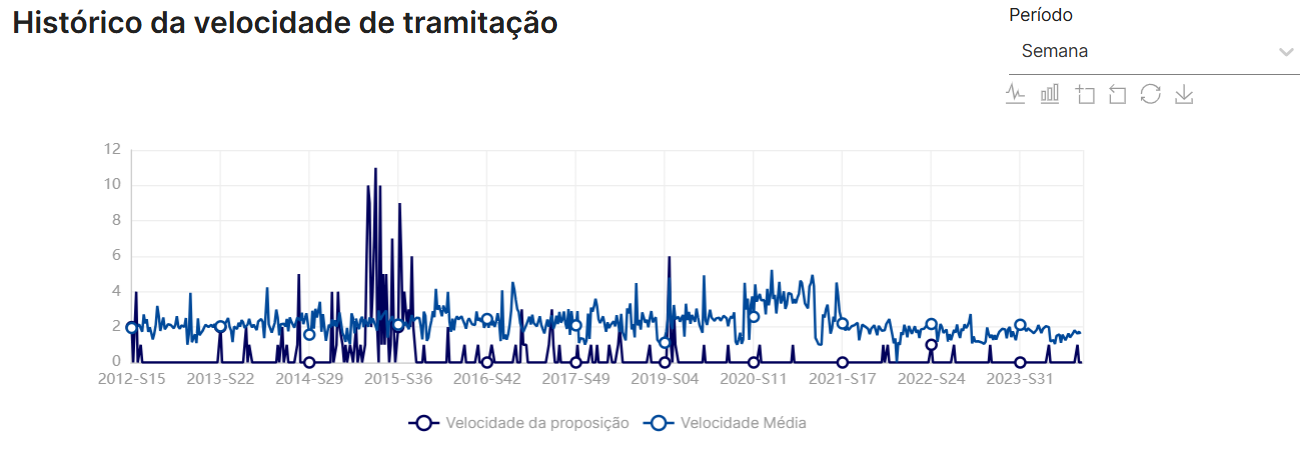
The analysis of PL 3722/12 reveals that it is still being processed. The last update, on 05/02/2024, shows Deputy Sargento Portugal (PODE-RJ) presenting a request for disapensation of PL 6,055/2023 from PL 3722/2012, indicating that the processing continues. In our analysis, we identified that the project gained relevance between 2014 and 2015, during Dilma Rousseff's government, and had a greater presence in parliament in 2019 under Jair Bolsonaro, who was in favor of the law. With the re-election of Luiz Inácio Lula da Silva in 2022, processing slowed down.
Source: Sigalei
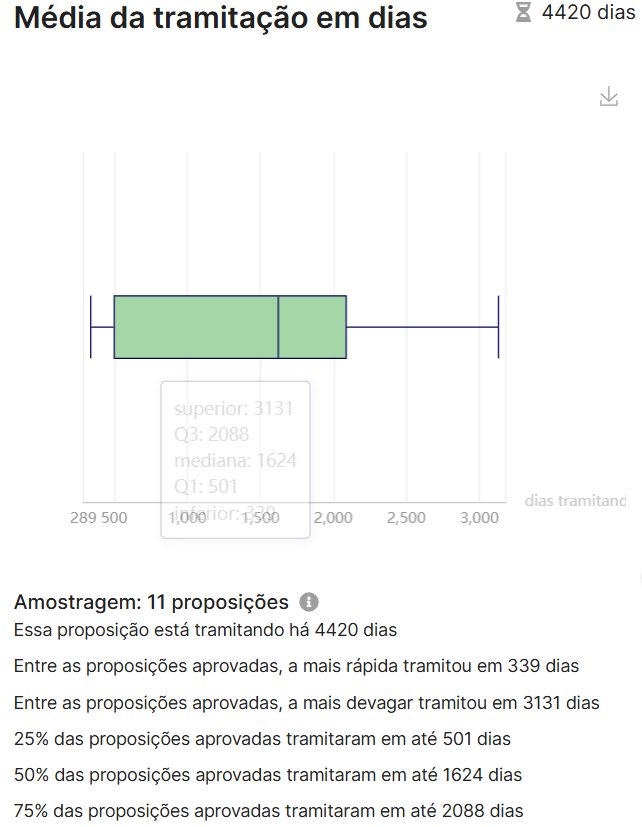
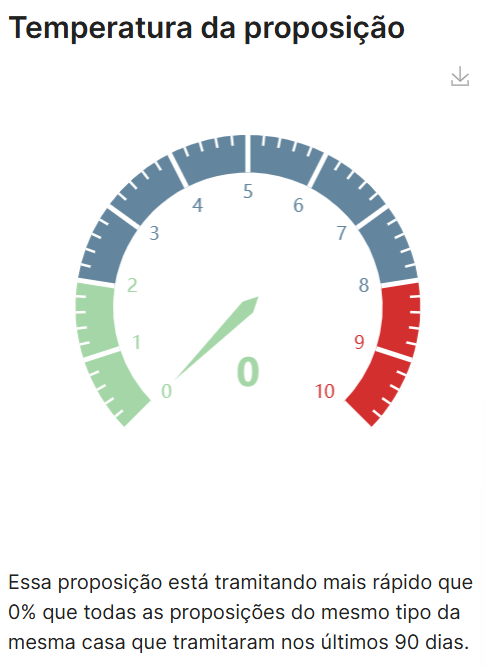
Currently, the PL has been in process for 4420 days, while the fastest proposition was processed in 339 days. It is observed that 75% of the approved propositions are processed in up to 2088 days. The PL's temperature is 0°, indicating a lack of significant progress. Thus, although possible, substantial progress of PL 3722/12 in legislation is unlikely in the short term.
Source: Sigalei
References:
“Portal Da Câmara Dos Deputados.” Accessed on: May 18, 2024. Available at: <www.camara.leg.br/proposicoesWeb/fichadetramitacao?idProposicao=541857>.
CD PL 3722/2012, Sigalei. Accessed on: May 18, 2024. Available at: <https://web.sigalei.com.br/app/bill/QmlsbDpzbF9iaWxsLkNELlBMLjM3MjIuMjAxMg%3D%3D/general>.