
1. Identification of a bill of interest.
Amends Law No. 12594/2012, which establishes the National Socio-Educational Service System (Sinase) and regulates socio-educational measures for adolescents who commit infractions, providing for personal searches in Sinase internment units. The proposal ensures that the search is conducted with respect for human dignity, prohibiting undressing, the introduction of objects into the person, and inhuman or degrading treatment.
This amendment aims to respond to reports of abuse, ensuring practices that respect the dignity of adolescents. Searches must be conducted ethically and professionally, preferably using non-invasive equipment, such as metal detectors.
The measure seeks to create a safer and more humane environment in socio-educational units, promoting the recovery of adolescents. The proposal is supported by human rights organizations but faces some resistance due to security concerns in the units.
2. Processing analysis.
a. Detailed processing.
The processing of PLS 451/2015 began in the Federal Senate, initiated by Senator Eduardo Amorim (PSC/SE), through the Constitution, Justice and Citizenship Commission in 2015. In the aforementioned commission, the Commission President, Senator José Maranhão, designated Senator Ana Amélia as the rapporteur for the matter, and with a vote for the approval of the project, it moved to the Commission's agenda.
On 11/18/2015, the Commission approved the Project and Amendment No. 1-CCJ, reported by Senator Ana Amélia, and on 12/01/2015, the PLS was approved in the Plenary and sent to the Chamber of Deputies.
On 12/02/2015, Bill No. 3832/2015 was presented to the Plenary by the Federal Senate, which: "Adds articles to Law No. 12,594, of January 18, 2012, to provide for personal searches in the internment units of the National Socio-Educational Service System (Sinase)".
Shortly thereafter, the project was forwarded to the Public Security and Combating Organized Crime Commission (CSPCCO), where Dep. Pompeo de Mattos (PDT-RS) was appointed as Rapporteur, who gave a positive opinion to this project but rejected the attached projects, namely: Bills No. 860/2015, 1,720/2015, 5,682/2016, 2,686/2015 and 404/2015.
Several ordinary deliberative meetings were held between November and December 2016 at the CSPCCO, but most of the time it was removed from the agenda due to the absence of the rapporteur and requests, being approved on 12/14/2016. Subsequently, it was received by the Constitution, Justice and Citizenship Commission, where Deputy Chico Alencar (PSOL-RJ) was appointed as rapporteur, giving an opinion on constitutionality, juridical aspects, and legislative technique.
In October 2018, it was approved in a meeting convened by the Commission President and forwarded for publication, in addition to being included in the Official Diary of the Chamber of Deputies (DCD). The project is currently ready for the agenda in the plenary.
b. Identification of the main political actors involved in the processing. As previously mentioned, the Bill in question involved the following political actors:
- Senator Eduardo Amorim (PSC/SE): author of the project.
- Senator José Maranhão (PMDB/PB): President of the Constitution, Justice and Citizenship Commission.
- Senator Ana Amélia (PSD): Rapporteur of the matter in the Senate.
- Deputy Pompeo de Mattos (PDT/RS): Rapporteur of the matter in the Chamber of Deputies. - Deputy Chico Alencar (PSOL-RJ): Rapporteur of the matter in the Chamber of Deputies.
c. Sigalei tools for processing analysis.
When analyzing the processing of PLS 451/2015 on SigaLei, we observed that the proposition's temperature is at 0; according to the site, this proposition is advancing at a speed above 0% when compared to all propositions of the same type from the same house that have been processed in the last 90 days. The proposition has an average processing time of 3240 days and had its last update on 10/22/2019.
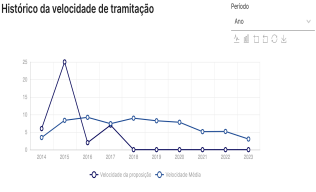
Source: Sigalei Platform
3. Identification of civil society stakeholders involved in the processing.
3.1 National Justice Council (CNJ)
Senator Ana Amélia (PP-RS), rapporteur of the project in the Constitution, Justice and Citizenship Commission (CCJ), cites a recommendation from the National Justice Council (CNJ) that condemns the practice and a resolution from the National Criminal and Penitentiary Policy Council that prohibits vexatious searches, replacing them with the use of electronic equipment (JUSBRASIL, 2016).
3.2 Prison without Walls Project, from the Earth, Work and Citizenship Institute (ITTC)
Vexatious searches represent the main obstacle to preserving the emotional bond between adolescents in conflict with the law and their families. According to an assessment by human rights entities and specialists in the field, such searches directly impact the reduction of visits.
3.3 Federal District Socio-Educational System
The undersecretary of the Federal District Socio-Educational System, Maria Conceição Paula, believes that the approval of PLS 451/2015 by Congress will fill this gap and solve the problem (JUSBRASIL, 2016).
Maria Conceição emphasizes that the elimination of vexatious searches does not compromise the security of internment units. She cites a survey by the Public Defender's Office of the State of São Paulo, which showed that after 3.4 million vexatious intimate searches in prisons throughout 2012, only 0.013% resulted in the seizure of cell phones and 0.01% of narcotics, with no weapons found. In socio-educational units, seizures were even lower, approaching zero.
3.4 Criminal justice network
3.4.1 NGO Conectas Human Rights
For Conectas NGO lawyer Vivian Calderoni, the country is in a movement to ban the practice, but it is up to the National Congress to accelerate this process, standardizing the procedure throughout Brazil through a federal law (JUSBRASIL, 2016).
3.4.2 Association for Prison Reform
3.4.3 Institute of Human Rights Defenders
3.4.5 Defense Rights Defense Institute
3.4.6 Sou da Paz Institute
3.4.7 Prison Pastoral
3.5 Episcopal Pastoral Council
The Episcopal Pastoral Council, linked to the National Conference of Bishops of Brazil (CNBB), released a note reproving vexatious searches in prisons. Last year, entities launched the Campaign for the End of Vexatious Searches, with reports from prisoners' relatives and statistics about the practice (JUSBRASIL, 2016).
4. Scenario for the advancement or not of the bill.
The favorable scenario for the advancement of Senate Bill (PLS) 451/2015 is based on several concrete evidences. To begin with, the processing of the project in the National Congress has been favorable. PLS 451/2015 was approved by the Senate CCJ before being approved in the Senate plenary. The project was examined by the Public Security and Combating Organized Crime Commission in the Chamber of Deputies and received a favorable opinion from the rapporteur, Deputy Pompeo de Mattos. The project was approved in this commission in December 2016 after deliberations. Furthermore, the project's rapporteur, Deputy Chico Alencar, also approved it in the Chamber's CCJC.
In addition to legislative support, the project receives strong support from civil organizations. Organizations such as the Earth, Work and Citizenship Institute (ITTC), Conectas Human Rights, and other NGOs have insisted that PLS 451/2015 be approved. These organizations actively participate in public hearings and demonstrations, affirming that the removal of vexatious searches is essential to preserve family ties and protect the dignity of inmates without threatening the security of prison facilities. The project's viability is reinforced by favorable recommendations from important bodies, such as the CNJ and the National Criminal and Penitentiary Policy Council.
Finally, a significant sign of progress is that the project is ready to be voted on in the plenary of the Chamber of Deputies. It is likely that PLS 451/2015 will be approved soon, considering the fact that there is little opposition so far and that support from the legislature and civil society continues. Ultimately, the approval of the project is expected due to favorable processing, support from civil entities, and recommendations from judicial bodies.
5. REFERENCES
BRAZIL. National Congress. Senate Bill No. 451, of 2015. Available at: https://www.congressonacional.leg.br/materias/materias-bicamerais/-/ver/pls-451-2015. Accessed on: May 25, 2024.
BRAZIL. Chamber of Deputies. Bill No. 3832, of 2015. Available at: Accessed on: May 25, 2024.
JUSBRASIL. Project prohibits vexatious search of visitor of interned young offender. Available at: frator-internado/262112970>. Accessed on: May 25, 2024.
SIGALEI. Bill No. 3832, of 2015. Available at: https://www.sigalei.com.br/. Accessed on: May 25, 2024.