1 GENERAL CONTEXT AND EXPLANATION OF THE BILL
The persistence of clandestine practices and the debate about the potential economic and social benefits of regulating gambling influence the legislative discussion today. It is in this context that Bill 442/1991 creates the proposal for a regulatory framework that allows the legal exploitation of gambling games, with the aim of controlling and monitoring the activity, with prospects of generating tax revenue for the State.
The new menu of Bill 442/1991 broadens the project's objective to not only legalize the "jogo do bicho", but to regulate the exploitation of all gambling games and bets in Brazil. It proposes altering the existing law on horse racing, Law No. 7,291, of December 19, 1984, repealing Decree-Law No. 9,215, of April 30, 1946, which prohibits the practice and exploitation of gambling games throughout the national territory and, provisions of Decree-Law No. 3,688, of October 3, 1941 (Criminal Misdemeanors Law), and of Law No. 10,406, of January 19, 2002 (Civil Code).
The author of the project is Renato Vianna. The PMDB member from Santa Catarina was affiliated with the Brazilian Democratic Movement (MDB). In his political career, he was part of several permanent committees in the Chamber of Deputies, participated in special committees, and was involved in parliamentary investigations, such as the case of the privatization of VASP.
The motivations of the project are based on the vision that with the regulation of gambling, it will be possible to reduce clandestine activity and its association with organized crime, suggesting that legalization will allow for more effective control of these activities. The regulation project represents the interests of various groups that see the legalization of gambling as a great opportunity to generate employment, expand business, boost tourism, and contribute to tax collection.
2 PROCESSING ANALYSIS
Bill 442/1991 was presented in the Chamber of Deputies in 1991 by Deputy Renato Vianna (PMDB-SC). In April, the project was forwarded to the Directing Board, which determined its processing regime as ordinary and began its dispatch to the Constitution and Justice and Citizenship Committee (CCJC), which would also be forwarded for its consideration in Plenary. At first, the project was designated to rapporteur Deputy Nilson Gibson (PSB-PE) in the CCJC, with 5 amendments presented. In April 1993, the project was redistributed to rapporteur Deputy Dércio Knop (PDT-SC).
In September 1993, a project was attached: Bill 1212/1991, by Paulo Almeida (PTB-RJ), which deals with the authorization for the exploitation of the lottery known as Jogo do Bicho. Without amendments presented for the project, in November 1993 the rapporteur presented a favorable opinion, approved unanimously among other deputies belonging to the CCJC. In July 1994, a Special Committee (CESP) was created, in which it was requested the forwarding of all propositions in process in the Chamber of Deputies referring to gambling games and the regulation of casinos in Brazil, in addition to the designation of the rapporteur Deputy Pinheiro Landim (PMDB-CE), without the presentation of amendments to the project.
Since then, the processing of the project was paralyzed. Only in 2015, Deputy Nelson Marquezelli (PTB-SP) presented a Request for Redistribution No. 1103/2015, for the creation of a Special Committee for the debate of the project and attachments. This was partially approved, in addition to the inclusion in the processing of the project by the Sports Committee, Tourism Committee, Work, Administration and Public Service Committee, and the Finance and Taxation Committee, in which the Special Committee was created and, in the same decision, the project's consideration by the Plenary was determined.
In September 2015, other projects were attached: Bill 6020/2009, created by Dr. Paulo César (PR-RJ) which provides for the exploitation of gambling games and, Bill 4062/2012, by Manoel Junior (PMDB-PB), which aims at the legalization of the operation of casinos in resorts; and, finally, Bill 3554/2015, by Carlos Henrique Gaguim (PMDB-TO), which refers to the activities of casinos in regions with greater potential for tourism development.
In October 2015, Deputy Guilherme Mussi (PP-SP) was designated rapporteur in the Special Committee. In June 2016, other projects were attached to Bill 442/1991: Bill 3090/2015, authored by Deputy Marcelo Matos (PDT-RJ), provides for the collaboration of casino activities for the Financing of Social Security (Cofins); Bill 3096/2015, created by Deputy Domingos Neto (PROS-CE), for the definition of municipal public policies in semi-arid regions for the construction of casinos; Bill 3420/2015, by Deputy Pompeo Mattos (PDT-RS), which also provides for the exploitation of the lottery for activities related to gambling games; Bill 3815/2015, authored by Deputy Nelson Marquezelli (PTB-SP), which requests changes regarding the operation of lotteries and gambling games; and, finally, Bill 4065/2015, by Deputy João Rodrigues (PSD-SC), which deals with the operation of casinos in municipalities with low human development. Next, rapporteur Deputy Guilherme Mussi (PP-SP) presented a favorable opinion on the project and attachments, in which there was also approval from other participants in the Special Committee. In December 2021, Request No. 5358/2016 was approved, which changes the processing regime of the proposition, making it of an urgent nature. Regarding its processing in Plenary, several amendments were presented and their respective votes in the legislative house, with the designation of rapporteur Deputy Felipe Carreras (PSB-PE). In the vote on the Final Draft in the Plenary, Bill 442/1991 was approved with 55% of the valid votes, with 246 "yes" votes, 202 "no" votes, and 3 abstentions.
The project continued its processing to the Senate as Bill 2234/2022 in February 2022, which was determined to have ordinary processing and dispatched to the CCJC and as rapporteur Senator Irajá (PSD-TO). In April 2024, Requests No. 6 and 7, authored by Eduardo Girão (NOVO-CE) and Carlos Viana (PODEMOS-MG), which requested the holding of a Public Hearing, were accepted, which was held in early May, chaired by Senator Marcos Rogério (PL-RO). The last movement of the project was on May 21, 2024, in which Amendments No. 16 and 17, authored by Senator Mecias de Jesus (REPUBLICANOS-RO), were forwarded.
3 STAKEHOLDER IDENTIFICATION
By analyzing Bill 442/1991, it is possible to observe stakeholders which it mobilized, in addition to identifying their positions and degree of impact. Among the main interest groups, we can highlight lottery syndicates, municipal and hotel associations, companies in the sector, and religious groups.
Regarding the lotteries, it is clear that the representative body of this group is the Lottery Agents Syndicate, which was summoned to express its views on the possibility of resuming state lotteries with the improved legislation and reviewing the pros and cons of exploiting gambling games in Brazil. The lotteries' position is in favor of the project, since, with legalization, the market will be regulated and, mainly, more competitive, which is interesting for the economic flow. The impact of this stakeholder is high, as they are responsible for significantly collecting resources and funds and, consequently, play a crucial role in the economy.
Regarding hotels and resorts, it is possible to highlight the ABIH (Brazilian Association of the Hotel Industry) and the Brazilian Association of Resorts (Resorts Brasil), since Bill 4062/2012, which legalizes the operation of casinos in resorts, was attached to the analyzed Bill. This is because tourism is an essential key in the Brazilian economy, which makes gambling games an opportunity to attract foreign tourists to the national territory. The position of hotels and resorts is also favorable to the project, since its approval can lead to an increase in accommodations and thus help in profitability and performance. Thus, the impact of this stakeholder is medium for assisting in the country's economy and in making gambling games available to a wide audience.
Referring to tourist cities, it is important to highlight the ABM (Brazilian Association of Municipalities), since Bill 3554/2015, which refers to casino activities in regions with greater potential for tourism development, was attached to Bill 442/1991. This is because casinos can assist in developing the local economy, which leads to a favorable position from tourist cities regarding the project. The impact that this stakeholder exerts is medium, contributing to economic growth not only in the region but also in the state in which it is inserted and the nation as a whole.
Regarding the companies in the sector, it is possible to highlight Abrajogos, an association of companies that represents the corporations in the sector. In addition, gambling companies such as Monte Carlo Administração Casa de Jogos LTDA (CNPJ: 00.346.209/0001-40), Betmotion, Blaze, Fertitta Entertainment, which do not have a CNPJ because they are not registered in Brazil, and casino game companies, such as Bet360 Loterias (CNPJ: 23.677. 389/0001-00). These actors have a contrary posture towards the project, since greater control of their operations in Brazil means more severe taxation. This group presents a high impact, since they have greater opportunities to expand their operations and participate in a potentially lucrative market.
Moreover, its main critical actor was called to discuss the Bill, that is, the National Conference of Bishops of Brazil. Thus, the group was required through the presence of the lawyer representing the "Brazil without Gambling Movement". This is because, according to the evangelical bench in Congress, there is a discussion regarding the violation of Christian moral, social, and economic principles from the release of gambling games and casinos. Thus, the impact of this stakeholder can be considered medium, given the representation of this bench in the country. During the processing, a Public Hearing took place on May 09, 2024, with the support of the Secretariat to Support the Constitution, Justice and Citizenship Committee of the Senate, to determine the instruction of the matter. Chaired by Senator Marcos Rogério, the following stakeholders were convened with the purpose of having a dialogue on the different perspectives of each of these: Lottery Agents Syndicates, ABIH, Resorts Brasil, ABM, National Conference of Bishops of Brazil, and Abrajogos.
4 SCENARIO ANALYSIS
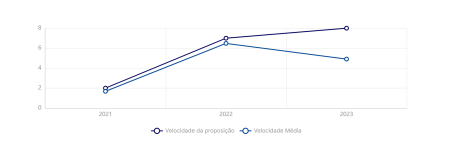
Using the tools offered by Sigalei, it was possible to observe the speed of Bill 442/1991. Presented in the Chamber of Deputies in 1991 by Deputy Renato Vianna (PMDB-SC), it had a fast start, above the average speed of other propositions. However, its processing was interrupted from November 1995 until March 2008, and only in 2015 did the project gain new life with the creation of a Special Committee and other attached projects.
Image 1: History of processing speed for Bill 2234/2022.
Source: Siga Lei, 2024.
After its approval under the urgency regime in the Chamber of Deputies in 2022, the project was subsequently forwarded to the Senate as Bill 2234/2022. This movement highlighted an interest in accelerating the legislative process, which culminated in relatively quick approval compared to other bills being processed. In the current phase of the Constitution and Justice and Citizenship Committee (CCJC) of the Senate, the project has advanced agilely.
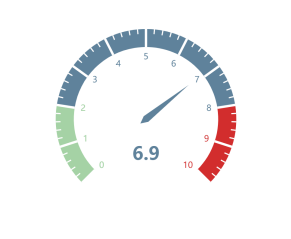
Based on this processing history, Image 2 presents the current temperature of the proposition of Bill 2234/2022, which is in the moderate temperature range, indicating faster processing than 69% of similar propositions over the last 90 days, causing new dynamism in its legislative process. Despite the agility and the relevant position of Senator Irajá as project rapporteur in the committee, the chances of approval are considered high, but only in the long term. This is due to the controversial nature of the topic and resistance from strong opposition groups.
Image 2: Temperature of proposition Bill 2234/2022.
Source: Siga Lei, 2024.