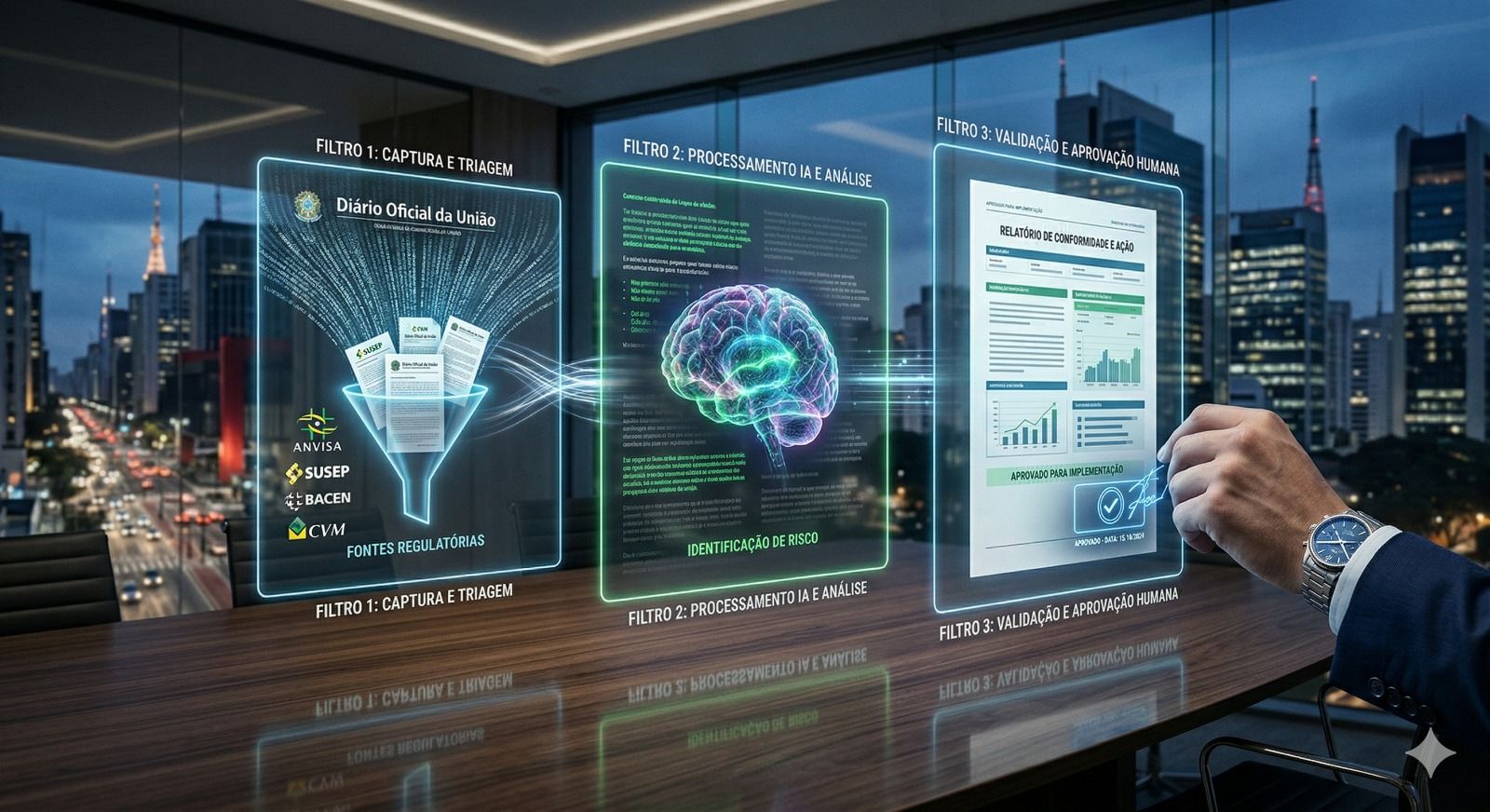

Losing important information is a critical situation for those who handle political-regulatory monitoring, especially because this gap can harm an institution's Institutional and Government Relations (IGR) strategy.
This type of information, you know, usually signals risks/opportunities that need to be analyzed/prioritized and unique performance windows that open and close, sometimes irreversibly. It is with them that the organization distributes tasks and takes action at the correct timing.
In order not to run the risk of "dropping the ball", technology is fundamental.
Therefore, configuring the tool with the correct parameters is a critical step in the job. Only in this way will the software be fully capable of identifying, selecting, and communicating truly relevant information.
To help you with this challenge, we will share with you the parameterization methodology we use at Sigalei. In this way, you configure your monitoring tool and don't miss any relevant information.
This methodology, constantly improved, is validated by our Services team, who fulfill the functions of monitoring and intelligence analysts for clients who prefer to focus 100% on strategy and performance.
It is with this method that we identify critical information amid high noise, and thus help our clients to be more proactive.
Discover the seven steps we take.
Step 1 - Define the themes
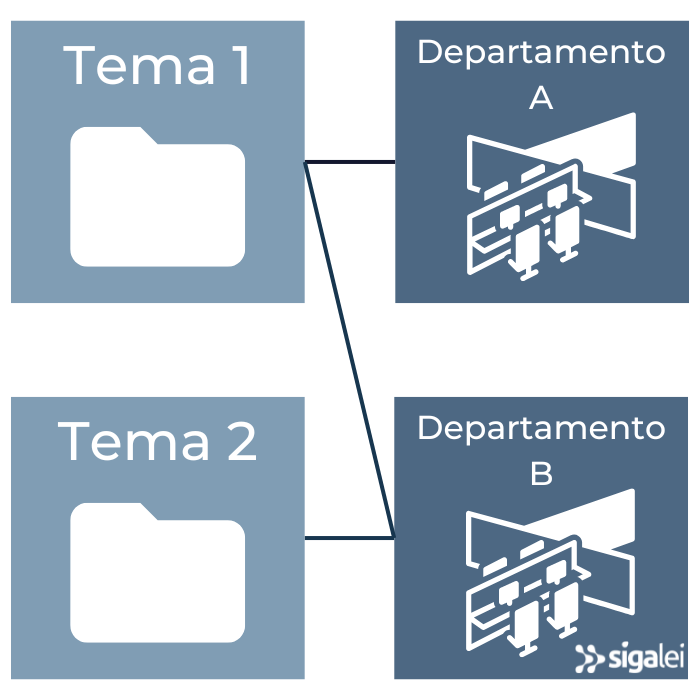
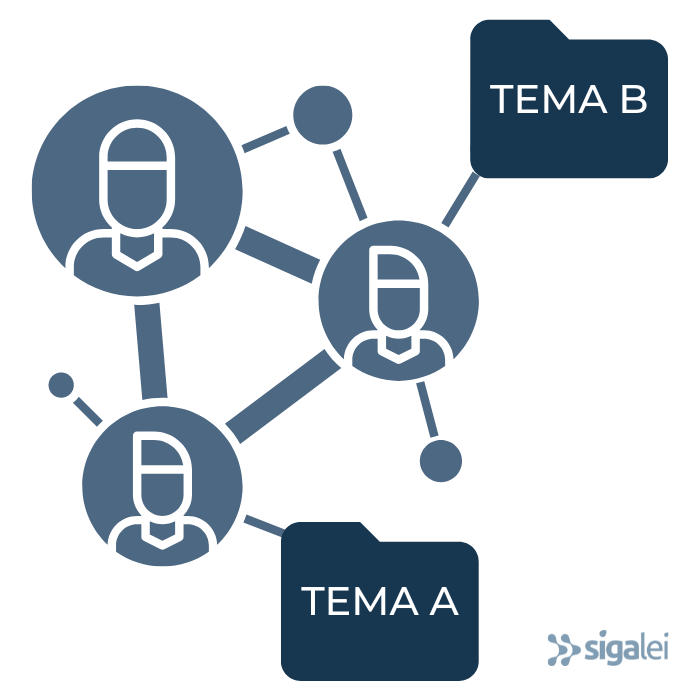
At Sigalei, we call “themes” the folders or drawers that store all the documents that will be captured, analyzed, and shared within the institution. These themes need to be thought out based on the decision-making structure of your organization.
The objective is to give context to the information, speeding up the process for whoever has to interpret it. This makes it very clear that this folder will store everything that is of direct interest to a specific group of people. Another gain is in the communication process, since the system will be able to generate automatic alerts for the previously determined people in your institution.
Thus, if your organization has people who take care of tax issues, it is recommended to create a “Tax” theme. And this goes for everything – whether a new regulatory framework, an acquisition under analysis at Cade, or a serious accident at a competitor, just to name three examples.
One way or another, it is worth noting that, depending on the complexity and scope of the subjects addressed, a given document could be classified under one or more themes. This functionality is perfect for allowing people from different areas to work in a coordinated way in risk or opportunity situations.
Step 2 - Define the monitoring scope
The second step is to define which geographies impact your institution – and the respective government agencies of interest.
That is: is your institution impacted at the federal level? Or in the states and municipalities? And which ones?
In this stage, it is worth pondering which are the most relevant for the institution. This helps to establish the monitoring targets. Example: is the focus of action municipal? Will this, therefore, be the monitoring to be prioritized, instead of the federal level?
Once the scope is defined, it is necessary to determine the arenas for each theme: Legislative, Executive, Judiciary, Media, or Social Networks? It is possible, for example, to choose to monitor the Municipality of São Paulo, the Legislative Assembly, the municipal Official Gazette, the Mayor's and Governor's Twitter. Depending on the relevance of the theme, it is worth monitoring all arenas; in other cases, perhaps one arena is enough.
Step 3 – Choose the keywords
The third step requires great care: filtering the keywords.
Our recommendation: calibrate the filters well on the platform and adjust the terms correctly. This way, you will only receive what is relevant, without missing anything that could be significant.
Here are five categories of words that you can use in your monitoring, shown in the figure and detailed below:
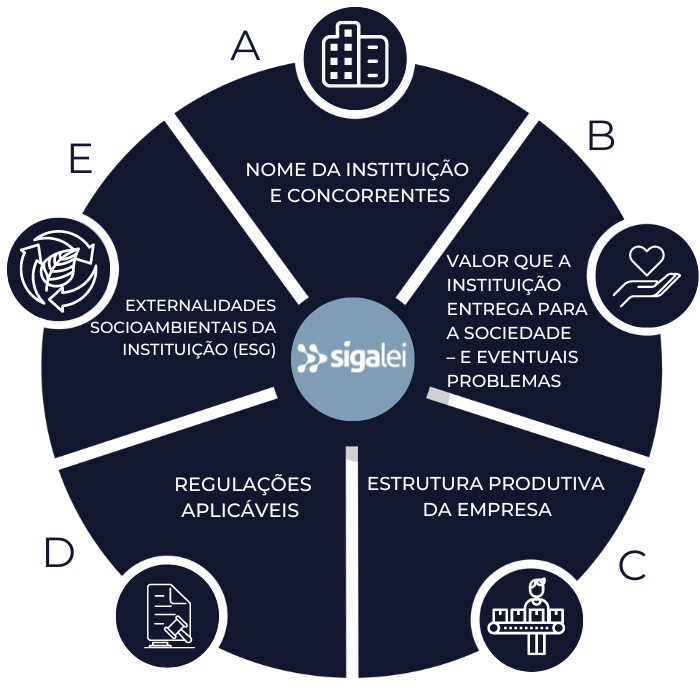
(A) NAME OF THE INSTITUTION AND COMPETITORS
Create keywords with the name or nickname of the institution and competitors. Try to remember the trade name, corporate name, nicknames... This allows you to capture direct mentions of the institution or competitors that may indicate reputational attacks or even the approach of a relevant stakeholder. An example of a nickname is the use of “Bandeirantes Palace”, in the Press, to refer to acts of the Government of the State of São Paulo.
(B) VALUE THAT THE INSTITUTION DELIVERS TO SOCIETY – AND POSSIBLE PROBLEMS
Create a set of keywords representing the value that the institution delivers to society – and also any socio-environmental and economic problems and liabilities related to the activity. If your institution produces medicines for diabetes, for example, the keywords can be: diabetes, hypoglycemia, hyperglycemia, glaucoma, etc.
With these keywords, you will be able to identify trend signals related to the topics of interest that are debated in society, even if it does not directly reach your business model right now. It means a look at the horizon, in order to identify what is to come.
(C) PRODUCTIVE STRUCTURE OF THE COMPANY
Create a set of keywords representing your organization's productive structure.
- Raw materials;
- Technologies used;
- Manufactured products;
- Packaging used;
- Services offered;
- Productive processes used;
- Consumers impacted;
- Working classes of employees;
- Distribution channels;
- Logistics modals;
- Forms of advertising.
This list works as a compass for defining the keywords. And it is a homework assignment that should be done at the start, especially because it increases your perception of which filters are relevant. With these keywords, you will be able to identify signals of risks/opportunities or more concrete windows of action, which directly impact your institution's operation.
(D) APPLICABLE REGULATIONS
Much of the IGR work is directly related to regulatory and/or legislative changes with the potential to impact the institution. Therefore, it is absolutely essential to study the sector's regulatory framework and the following regulations inherent to the business:
• Labor regulations;
• Applicable tax regulations;
• Specific regulations of the products themselves, etc
An effective way to identify risks and opportunities is to set as keywords the regulatory base applicable to your institution, that is, relevant laws and infralegal measures. These nomenclatures alone are sufficient to capture information important for your monitoring.
Example: 'Law No. 11,445/2007'.
With these keywords, you will be able to identify much more concrete risks/opportunities, and more precisely the changes in the regulatory structure on which your institution is currently based.
(E) SOCIO-ENVIRONMENTAL EXTERNALITIES OF THE INSTITUTION (ESG)
Any business has socio-environmental externalities. In other words, it can generate social and/or environmental gains or losses.
The challenge here is to understand how society is mobilizing around issues that impact its business model and to select keywords that allow you to identify risks or opportunities or issues related to your institution's ESG policies.
With these keywords, you will be able to identify trend signals related to the topics of your interest being debated in society, even if it doesn't directly touch your business model currently. It's a look to the horizon and identifying what is to come.
Step 4 - Encapsulate keywords into subject groups and within themes
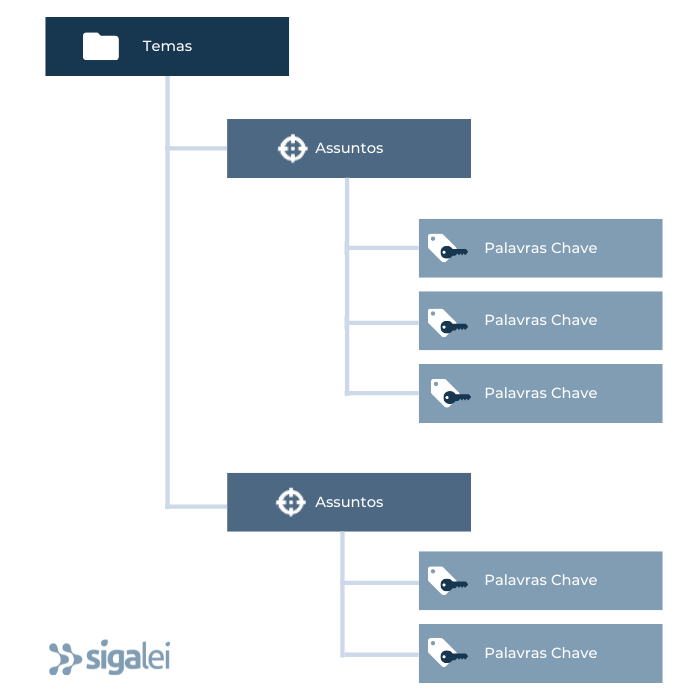
The fourth step involves grouping the set of keywords. This group must receive the name of a subject of interest to the institution. In addition to making it easier to process the documents found, this grouping will allow the extraction of insights that connect subjects to certain themes.
A good tip is to stipulate the degree of importance of each subject, with scores from 1 to 10, according to the level of relevance to the institution, as shown in the following example:
Radar:
Theme: Pharmaceuticals
Name: Rare Diseases (Subject)
Keywords: Diabetes, Hypoglycemia, Hyperglycemia
Importance: (8) from 1 (least important) to 10 (most important)
Step 5 - Define context and negative words
In this fifth step, it is important to limit the context of a given keyword to improve the precision of the captured information. In other words, the word “heart” can be associated with a medical context or used as a slang term or catchphrase.
Therefore, it is important to enter keywords into the system that complement the previously highlighted keywords. On the other hand, there are other words that eliminate the desired context – in this case, use negative words to eliminate these contexts.
Going back to the heart case. Think in the context of a company that manufactures surgical materials for transplantation. In this case, the radar would look like this:
Main keyword: Heart
Contextualization word: Transplant
Exclusion word: Warm
Step 6 - Define stakeholders and connect to themes
The sixth step is one of the most fundamental for the IGR strategy.
Try to understand who the most important stakeholders are within each theme. Select those names and institutions that tend to influence decision-making whenever they make a pronouncement within a thematic area, and create keywords containing the name of these stakeholders, associated with other words related to the related themes.
Whenever these stakeholders make a statement, the system will highlight the documents. This is important because the greater the weight of a mentioned stakeholder, the higher the probability that these documents are relevant, and this facilitates prioritizing the analysis of the information.
Step 7 – Always review and update the keyword database!
This step is very important and has permanent validity. This is the secret to robust and reliable monitoring. Every time you detect that a relevant document was not captured, make the adjustment in the keywords.
These periodic reviews and updates are essential to close all blind spots and decrease the probability that you will lose critical information.
***
We are certain that this guide contributes greatly to more assertive parameterization.
Investing in this step, believe me, is a productivity gain in IGR monitoring.
And this is the methodology we use successfully here at Sigalei.
We have a robust technology platform with artificial intelligence resources. And the feedback from our clients has been invaluable in improving the software.
We are also experts in monitoring and analysis.
And we are sure we can help you improve your process, not only to make more efficient searches, but above all to identify risks and opportunities faster.
Let's talk so we can present all our solutions to you.
I await your message!
Felipe Molina is the Customer Success Director at Sigalei
felipe@sigalei.com.br